Megaesophagus in Dogs: Signs, Causes, Treatment & Long-Term Care
Megaesophagus in dogs causes regurgitation, weight loss, and aspiration pneumonia risk. Learn signs, causes, treatment, and long-term care.
If your dog brings up undigested food shortly after eating—without any gagging or retching—this is regurgitation, not vomiting. Regurgitation can be a primary sign of a condition called megaesophagus.
Megaesophagus is a disorder that prevents the esophagus—the tube connecting the mouth to the stomach—from moving food and water normally. While serious, many dogs live meaningful, happy lives with proper management and committed care.
What is Megaesophagus in Dogs?
Megaesophagus occurs when the esophagus becomes enlarged and loses its ability to contract normally. Instead of pushing food toward the stomach through coordinated muscle contractions, food and liquid remain trapped and are eventually brought back up—a process called regurgitation.
Understanding the difference between regurgitation and vomiting is important for recognizing megaesophagus. Dogs with megaesophagus regurgitate; they do not vomit. Regurgitation is passive: food comes back up without warning, abdominal effort, or nausea, and it often appears undigested and tubular in shape. Vomiting involves retching (rhythmic throat contractions before food comes up), abdominal effort, and partially digested material mixed with bile. While neither process is silent—both produce audible sounds—the character differs: vomiting has prolonged retching and heaving, while regurgitation typically creates a sudden gurgling or gagging noise. When food comes back up looking whole and undigested without those warning contractions, you’re witnessing regurgitation—a hallmark sign of esophageal dysfunction.
The canine esophagus is composed entirely of skeletal muscle, which explains why neuromuscular disorders commonly trigger megaesophagus. When skeletal muscle dysfunction occurs, the esophagus loses tone and coordination, leading to stretching and making it increasingly difficult for food to reach the stomach without gravity’s assistance.
In many dogs, no underlying cause is ever identified—a situation called idiopathic megaesophagus.
In these cases, there is no cure, and lifelong management is required. Even when an underlying disease is found and treated, normal esophageal function doesn’t always return, making gravity-assisted feeding a permanent necessity for most affected dogs.
Signs of Megaesophagus in Dogs
Common signs include:
- Frequent regurgitation, often shortly after eating
- Weight loss despite normal or increased appetite
- Excessive drooling or bad breath
- Nasal discharge
- Coughing, especially after meals
- Poor growth in puppies
- Lethargy if aspiration pneumonia develops
If your dog develops coughing, rapid breathing, fever, or extreme lethargy after regurgitating, seek emergency care immediately. These may signal aspiration pneumonia, a life-threatening complication.
Types, Causes, and Risk Factors of Megaesophagus in Dogs
While any dog can develop megaesophagus, some are genetically predisposed, including German Shepherd Dogs, Great Danes, Irish Setters, Labrador Retrievers, Miniature Schnauzers, Wire Fox Terriers, and Newfoundlands.
Congenital vs. Acquired Megaesophagus
Megaesophagus may be present from birth (congenital) or develop later in life (acquired). Congenital megaesophagus typically becomes apparent when puppies transition to solid food, as regurgitation begins shortly after weaning. Acquired megaesophagus is the more common form and usually develops in middle-aged to older dogs. While feeding management is similar in both forms, acquired cases are more likely to have an identifiable underlying cause.
Common Causes
The majority of megaesophagus cases are idiopathic, meaning no underlying cause is identified. When a cause is found, it is typically a neuromuscular disorder (particularly myasthenia gravis—an autoimmune condition) or a congenital abnormality such as vascular ring anomalies, especially in young dogs. Together, idiopathic, neuromuscular, and congenital forms account for most cases.
Less common but treatable causes include endocrine disorders such as Addison’s disease and hypothyroidism. More generalized polyneuropathies can also impair esophageal function. Structural or obstructive conditions, including thymomas, esophageal strictures, foreign bodies, esophageal inflammation, and toxin exposure, may also interfere with normal esophageal motility.
Diagnosing the Underlying Cause
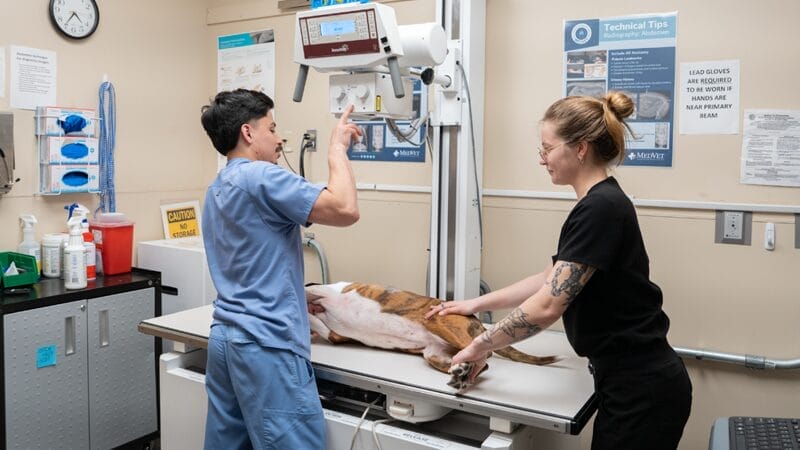
Despite thorough evaluation, many dogs are ultimately diagnosed with idiopathic megaesophagus, meaning no underlying cause is identified. Because some causes are treatable and may improve overall outcome, early and comprehensive diagnostic testing is strongly recommended. This typically includes chest radiographs (X-rays), baseline bloodwork, ACTH stimulation testing for Addison’s disease, thyroid evaluation when indicated, acetylcholine receptor antibody testing for myasthenia gravis, and sometimes an abdominal ultrasound.
How to Feed a Dog with Megaesophagus
Because the esophagus cannot move food effectively on its own, gravity becomes the most important tool in managing megaesophagus. Proper feeding technique is the foundation of long-term care.
Upright Positioning
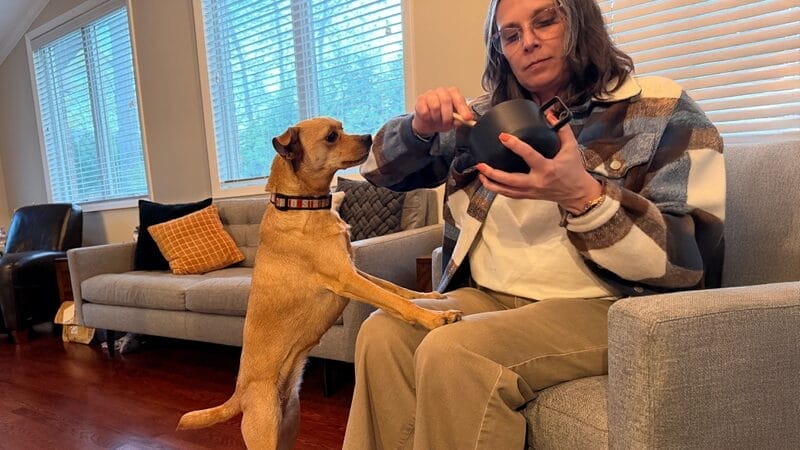
Dogs should be positioned at a 45–90-degree angle during meals and remain upright for 15–30 minutes afterward. This allows food to travel into the stomach with gravitational assistance rather than pooling in the esophagus. Many families use a specially designed Bailey chair, which supports the dog in a seated, upright posture during and after meals. Others adapt padded laundry baskets, modified containers, or custom-built platforms tailored to their dog’s size and comfort.
Upright positioning must be used consistently for all meals and often for water as well. Inconsistent positioning significantly increases the risk of regurgitation and aspiration pneumonia.
Choosing the Right Food Consistency
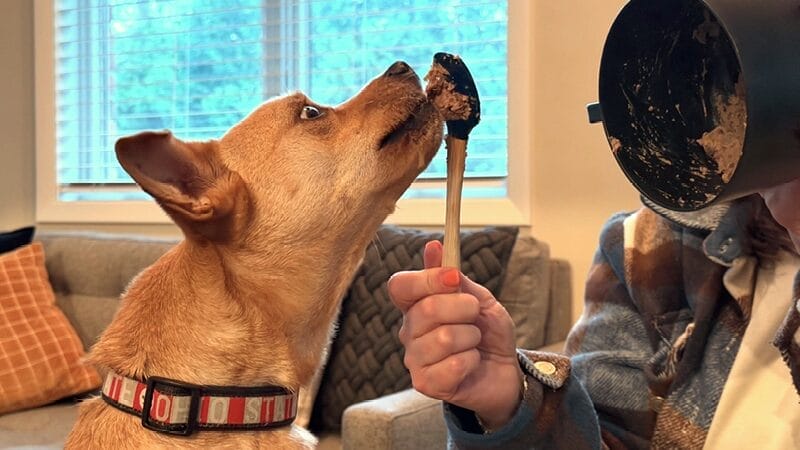
Finding the right food consistency is equally important, but there is no universal solution. Each dog responds differently. Some do best with small, canned food “meatballs,” while others tolerate dry kibble, moistened kibble, blended slurries, or gelatin-based cubes. Feeding multiple small meals throughout the day often improves success. Keeping a detailed record of food type, texture, portion size, and regurgitation frequency can help determine the most effective feeding plan.
Feeding Tubes and Hydration
Some dogs cannot meet their nutritional needs safely through oral feeding. In these cases, a feeding tube placed directly into the stomach, most commonly a gastrostomy tube (G-tube), allows food to bypass the esophagus entirely.
Placement requires anesthesia and home-care training, but for some dogs it dramatically improves weight maintenance and quality of life. Even with a feeding tube, however, aspiration can still occur due to saliva or reflux.
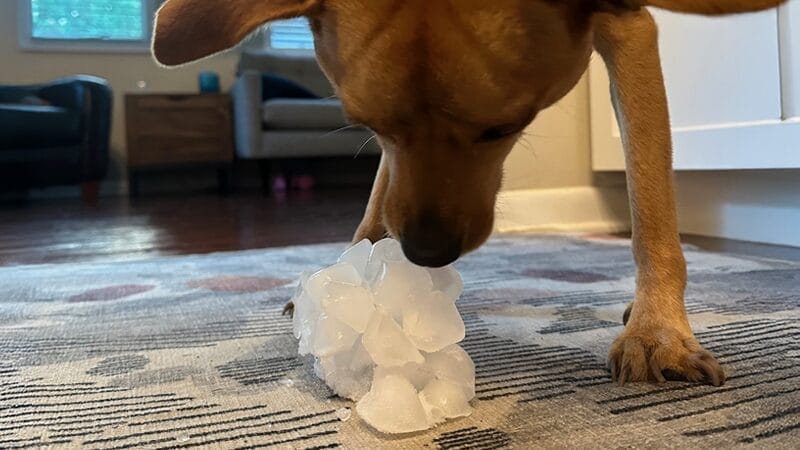
Hydration requires similar trial and adjustment. Water tolerance varies dramatically among dogs with megaesophagus. Some do well with thickened water, ice cubes, gelatin cubes, or small upright water offerings. Unrestricted access to a ground-level water bowl may increase aspiration risk in some dogs. Your veterinary team can help you determine the safest and most practical hydration strategy.
How Is Megaesophagus in Dogs Treated?
When diagnostic testing identifies an underlying cause, treatment targets that specific condition. Hormone replacement therapy addresses Addison’s disease, pyridostigmine improves nerve-muscle communication in myasthenia gravis, and surgical removal may resolve megaesophagus caused by a thymoma.
However, even when an underlying disease is found and treated, normal esophageal function doesn’t always return. In idiopathic megaesophagus, esophageal function will not improve, making gravity-assisted feeding a permanent necessity for most affected dogs.
Regardless of whether an underlying cause is found, supportive medications can help manage the condition. Acid-reducing drugs minimize esophageal irritation from reflux, antibiotics combat aspiration pneumonia when it develops, and medications that improve muscle function and gastrointestinal motility show emerging promise for some dogs.
It’s important to understand that these therapies do not cure megaesophagus itself, but they can meaningfully reduce complications and improve quality of life.
Aspiration Pneumonia in Dogs with Megaesophagus
While megaesophagus itself isn’t typically painful, its most serious complication, aspiration pneumonia, can be life-threatening and significantly affects long-term survival and quality of life.
Aspiration pneumonia occurs when food, liquid, or saliva enters the lungs. Because dogs with megaesophagus regurgitate frequently, sometimes in small amounts that go unnoticed, they face constant risk. Each regurgitation episode creates an opportunity for material to slip into the airways, and over time, this repeated exposure takes its toll.
Watch closely for warning signs: coughing, rapid or labored breathing, fever, lethargy, decreased appetite, and occasionally grey-tinged gums. If you notice these signs, contact your veterinarian immediately. Diagnosis is typically confirmed through chest X-rays, which reveal characteristic changes in the lung tissue.
The severity and frequency of aspiration pneumonia varies considerably among affected dogs. Some experience only occasional episodes that respond well to treatment, while others develop recurrent infections requiring repeated hospitalization and intensive care. Unfortunately, recurrent, severe aspiration pneumonia often becomes the primary complication affecting long-term survival and quality of life.
Beyond pneumonia, esophageal inflammation from repeated regurgitation can cause discomfort, contributing to lethargy. Managing these complications requires close attention and prompt veterinary intervention.
Life Expectancy and Prognosis for Dogs with Megaesophagus
Life expectancy varies dramatically. Some dogs live only months if aspiration pneumonia occurs frequently or weight cannot be maintained, while others thrive for years with diligent management. Several factors shape prognosis: the frequency and severity of aspiration pneumonia, ability to maintain healthy body weight, presence of a treatable underlying condition, and your capacity to maintain strict feeding protocols.
Managing megaesophagus requires significant dedication. Feeding schedules must be structured and consistent. Cleanup from regurgitation becomes routine. Hospitalization for pneumonia episodes can be emotionally and financially taxing. Understanding these realities upfront helps you make informed decisions about long-term care.
Quality-of-life decisions are deeply personal and should always be made in partnership with your veterinary team, who can help you assess your dog’s comfort, happiness, and overall wellbeing.
When Is Megaesophagus an Emergency in Dogs?
Contact your veterinarian immediately if your dog shows labored breathing, persistent coughing, collapse, fever above 103°F (39.4°C), blue-tinged gums, or severe lethargy. Aspiration pneumonia can progress rapidly and requires urgent intervention.
A megaesophagus diagnosis is undeniably challenging, but with patience, structure, and veterinary guidance, many dogs enjoy meaningful, quality time with their families—sometimes for years.
Visit our Pet Care Resources library for more pet health and safety information.
FAQs
Can megaesophagus in dogs be cured?
If an underlying disease like Addison’s or myasthenia gravis is identified, treatment may improve function. However, idiopathic megaesophagus has no cure and requires lifelong management.
Is megaesophagus contagious?
No. Megaesophagus is not infectious and cannot spread to other pets.
Can dogs live a normal life with megaesophagus?
Many dogs live happy lives, but daily feeding management and monitoring for pneumonia are required.
Is megaesophagus the same as acid reflux?
No. Acid reflux involves stomach contents irritating the esophagus. Megaesophagus is a motility disorder where the esophagus cannot properly move food to the stomach.
Learn More
Veterinary internal medicine specialists treat the gastrointestinal tract, kidneys, nervous system, and endocrine system.
Veterinary Internal MedicineShare




Contents
Learn More
Veterinary internal medicine specialists treat the gastrointestinal tract, kidneys, nervous system, and endocrine system.
Veterinary Internal Medicine