Understanding Diarrhea in Dogs and Cats: When to Worry and When to Wait
Pet diarrhea is often mild—but sometimes urgent. Learn when to monitor at home and when your dog or cat needs emergency care.
As a pet parent, few things are more unsettling than discovering your beloved dog or cat has diarrhea. Your mind may race with questions: Is this serious? Should I take my pet to the vet? What caused this? Whether this is your first puppy, your first kitten, or you’ve been a pet owner for years, it’s completely natural to feel concerned when your furry family member isn’t feeling well.
The good news? Most cases of diarrhea in pets are mild and resolve quickly with supportive care at home. However, some situations do require immediate veterinary attention. Our MedVet experts share what you need to know to make informed decisions for your pet’s health.
What Causes Diarrhea in Pets?
Diarrhea—characterized by loose, watery, or more frequent bowel movements—can stem from many causes. Your pet’s digestive system is sensitive and responsive to change. Common triggers include:
- Dietary indiscretions: That tempting turkey skin from the trash or an extra-generous treat portion can wreak havoc on sensitive stomachs. While pets can enjoy certain human foods, it’s important to know which foods are safe and which to avoid.
- Diet transitions: Sudden food changes can upset your pet’s digestive balance. New foods should be introduced gradually over several days.
- Stress: Boarding, moving, travel, or routine changes can trigger digestive upset— especially in anxious pets. Our guide on traveling with your pet offers tips to reduce stress.
- Parasites: Intestinal parasites like giardia, roundworms, or hookworms are particularly common in puppies and kittens.
- Infections: Viral or bacterial infections may cause acute gastrointestinal distress.
- Food sensitivities or allergies: Both cats and dogs can develop intolerances or allergic reactions to certain ingredients, even foods they’ve eaten for years.
- Underlying medical conditions: Inflammatory bowel disease, pancreatitis, , liver disease, and other chronic conditions may present with diarrhea.
For many otherwise healthy adult pets, a single episode of loose stool may resolve within 24 hours without treatment. The key is knowing when to monitor at home and when to seek professional care.
Special Considerations for High-Risk Pets
Some pets are more vulnerable to complications from diarrhea and require a lower threshold for seeking veterinary evaluation.
Age-Related Vulnerability
- Puppies and kittens: They have minimal fluid reserves, and dehydration can become dangerous within hours.
- Senior pets: Reduced organ function and immune changes make recovery more difficult.
Pre-Existing Health Conditions
Pets with heart disease, kidney disease, liver disease, diabetes, or immune system disorders can deteriorate quickly. Diarrhea in these patients should prompt immediate veterinary consultation.
Recent Medical Interventions
Recent surgery, anesthesia, medications—particularly antibiotics and certain pain relievers—can disrupt normal gut function. Contact your veterinarian if diarrhea develops.
Life-Threatening Emergencies
- Toxin ingestion: Exposure to household cleaners, medications, toxic plants, or spoiled food requires immediate veterinary care. Learn which common household items are toxic to pets.
- Bowel obstruction: Swallowed foreign objects (toys, fabric, bones) can cause diarrhea along with vomiting, straining, or abdominal pain. This can be a life-threatening emergency that may require urgent surgical intervention.
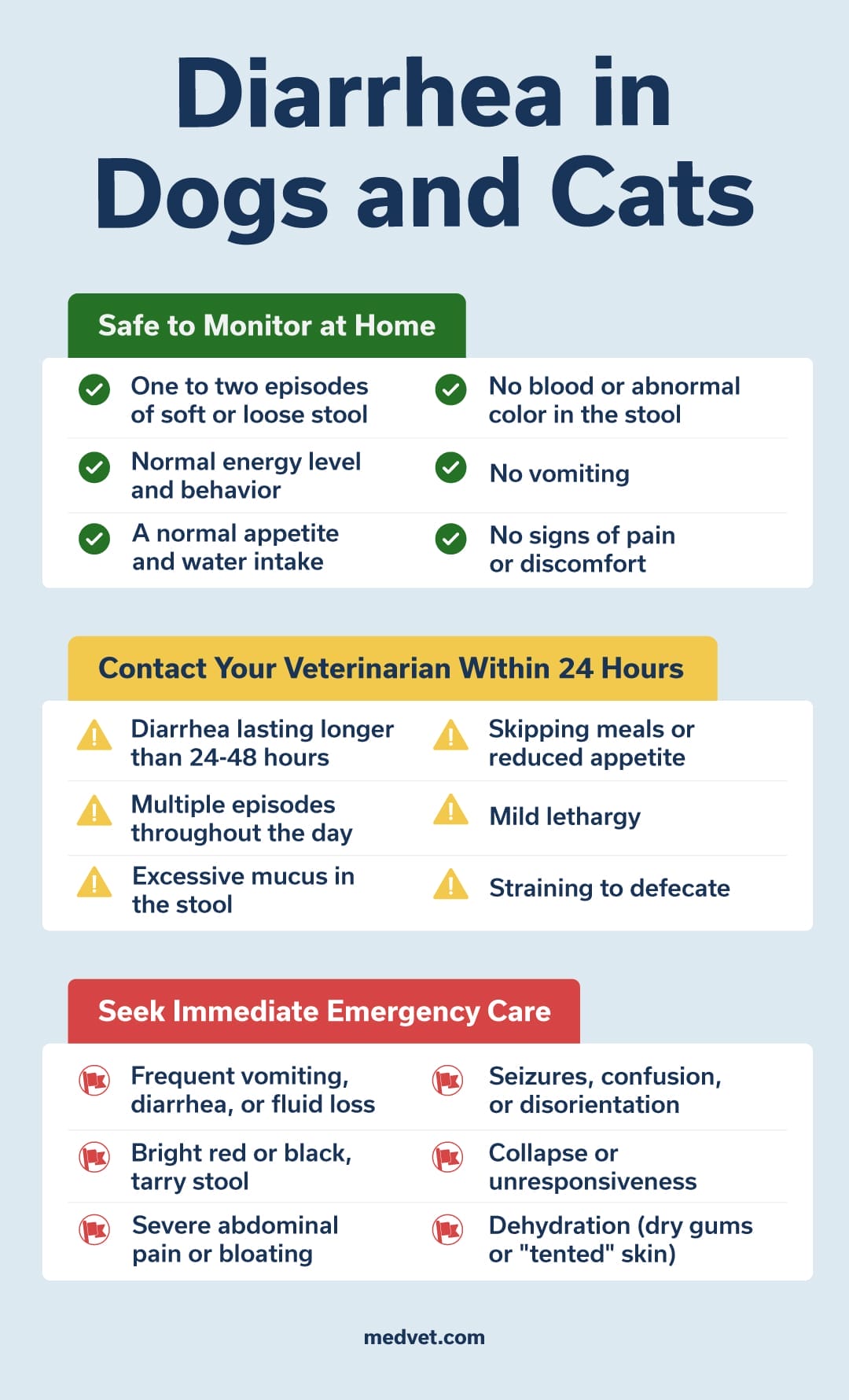
Reading the Signs: When to Monitor, When to Call, When to Rush
Safe to Monitor at Home
Careful observation may be appropriate if your pet has:
- One to two episodes of soft or loose stool
- Normal energy level and behavior
- A normal appetite and water intake
- No blood or abnormal color in the stool
- No vomiting
- No signs of pain or discomfort
Contact Your Veterinarian Within 24 Hours
Schedule an appointment if you notice:
- Diarrhea lasting longer than 24-48 hours
- Multiple episodes throughout the day
- Excessive mucus in the stool
- Skipping meals or reduced appetite
- Mild lethargy
- Straining to defecate
Seek Immediate Emergency Care
Seek urgent veterinary care if your pet experiences:
- Repeated vomiting and diarrhea, or inability to keep water down
- Bright red blood or black, tarry stool
- Severe abdominal pain, bloating or distension (especially in large-breed dogs—may indicate gastric dilatation-volvulus or “bloat”)
- Neurological signs: seizures, confusion, disorientation
- Collapse, extreme weakness, or unresponsiveness
- Signs of dehydration (dry gums, sunken eyes, skin remaining tented when pinched)
- Any concerning signs in high-risk pets
Home Care Guidelines for Mild Diarrhea

Gentle Dietary Management
If approved by your veterinarian and signs are mild:
- Brief fasting (adult pets only): A 12-24 hours fast may help rest the digestive tract. Never fast puppies, kittens, small breeds, or diabetic pets without veterinary guidance.
- Bland diet: Feed small, frequent meals of easily digestible food such as:
- Boiled boneless, skinless chicken breast (unseasoned)
- Plain white rice or sweet potato
- Plain canned pumpkin
- Veterinary prescription digestive formulas
Gradually transition back to your pet’s regular diet over 3-5 days once stools normalize.
Hydration: Your Top Priority for Pets with Diarrhea
Diarrhea can quickly lead to dehydration, which affects circulation, kidney function, temperature regulation, and electrolyte balance. Encourage hydration by:
- Offering fresh water frequently
- Providing multiple water bowls
- Adding small amounts of low-sodium broth (no onions or garlic)
- Offering wet food or a pet water fountain for cats
- Using pet-specific electrolyte solutions only if recommended
Cats are especially prone to dehydration and may not drink enough when ill. If hydration cannot be maintained at home, IV fluid therapy may be necessary.
Important Safety Reminders
Never give human medications without veterinary approval. Drugs such as loperamide (Imodium), ibuprofen or acetaminophen can be dangerous or fatal to pets. Always consult your veterinarian before administering any medication.
Provide a quiet, low-stress environment during recovery, and be patient—digestive upset is uncomfortable and beyond your pet’s control.
When in Doubt, Reach Out
You know your pet best. If something doesn’t seem right, trust your instincts and contact your veterinarian. If your pet is experiencing severe diarrhea, dehydration, or emergency signs and your primary veterinarian is unavailable, visit your nearest MedVet location. MedVet hospitals are open 24/7/365 with emergency veterinarians and specialists ready to help.
Visit our Pet Care Resources library for more pet health and safety information.
FAQs
How long is diarrhea normal in dogs and cats?
Mild diarrhea may resolve within 24 hours, but ongoing or worsening symptoms should be evaluated by a veterinarian.
Can I treat my pet’s diarrhea at home?
Some mild cases can be managed with veterinary guidance, hydration, and a bland diet—but never give human medications.
When is diarrhea an emergency for pets?
Diarrhea with blood, vomiting, severe pain, dehydration, or weakness requires immediate veterinary care.
Are puppies and kittens at higher risk from diarrhea?
Yes. Young pets can become dehydrated very quickly and should be evaluated sooner than healthy adults.
Learn More
Veterinary internal medicine specialists treat the gastrointestinal tract, kidneys, respiratory tract, liver, and endocrine system.
Veterinary Internal MedicineShare




Contents
Learn More
Veterinary internal medicine specialists treat the gastrointestinal tract, kidneys, respiratory tract, liver, and endocrine system.
Veterinary Internal Medicine