Echocardiography for Dogs and Cats: What It Is, Why It’s Used, and What to Expect
Echocardiography is a safe, non-invasive ultrasound that helps veterinarians diagnose and manage heart disease in pets.
If your veterinarian has recommended an echocardiogram for your dog or cat, it’s natural to have questions. Hearing that your pet may have a heart condition can feel overwhelming, but an echocardiogram—often called an “echo”—is one of the most helpful and gentle tools veterinarians use to evaluate how your pet’s heart is working.
At MedVet, our board-certified cardiologists perform echocardiography every day. It’s a safe, non-invasive ultrasound test that allows them to see the heart in real time, providing detailed information about heart size, structure, and function that other tests simply can’t capture. Most importantly, it helps our team make informed decisions about diagnosis, treatment, and long-term care, giving your pet the best possible outcome.
What Is an Echocardiogram?
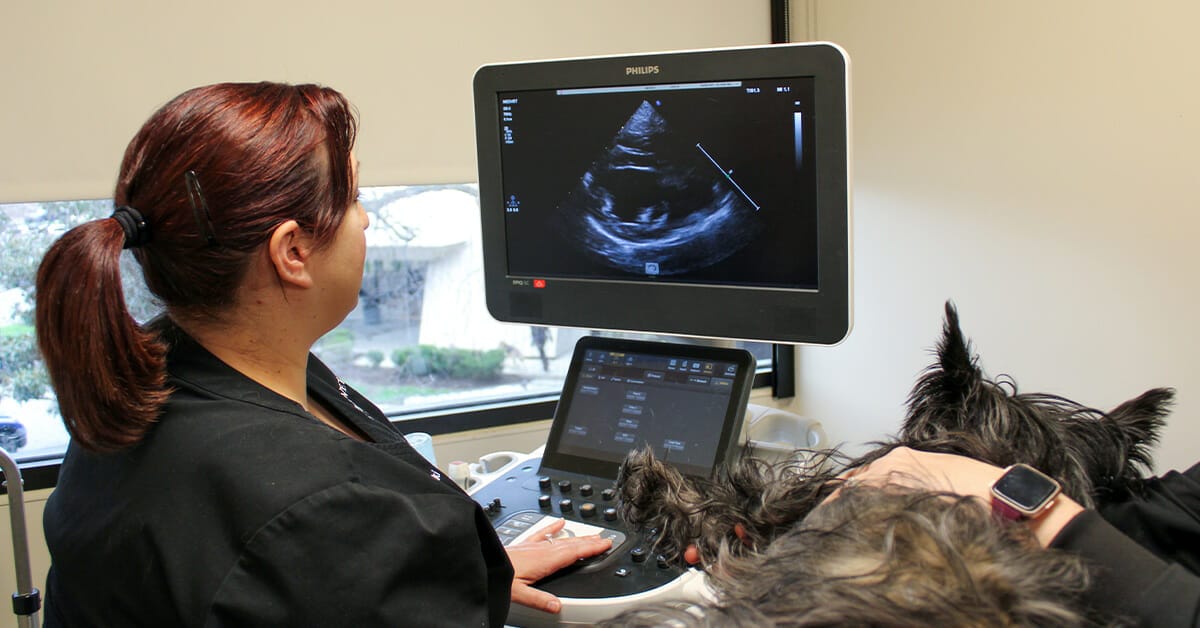
An echocardiogram is an ultrasound examination of the heart. Just like the ultrasound used in human medicine or during pregnancy, it uses sound waves—not radiation—to create moving images of internal structures.
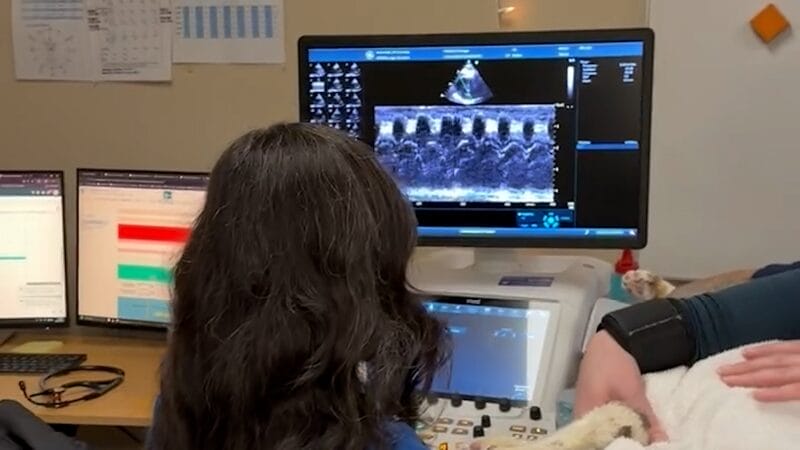
During an echocardiogram, a small probe is placed against your pet’s chest. This probe sends sound waves into the body and receives echoes back, creating detailed images of the heart as it beats. These images allow our cardiologists to see:
- The size and thickness of the heart chambers
- How well the heart muscle is contracting and relaxing
- Whether heart valves are opening and closing normally
- How blood is flowing through the heart
Because echocardiography shows both structure and motion, it’s considered the gold standard for diagnosing many types of heart disease in dogs and cats—and it’s one of the cornerstone services we provide at MedVet.
Why Might My Pet Need an Echocardiogram?
Your primary care veterinarian may refer your pet to MedVet for echocardiography for several reasons, including:
- A heart murmur detected during a physical exam
- Changes in breathing or exercise tolerance
- Coughing or weakness
- Fainting or collapse
- Irregular heart rhythms
- Monitoring known heart disease
- Screening for congenital (present at birth) heart conditions
- Screening for acquired heart disease in predisposed breeds
It’s important to know that a heart murmur doesn’t always indicate serious heart disease. Some murmurs are benign or caused by conditions unrelated to the heart. An echocardiogram performed by our specialists helps determine whether a murmur is related to a structural heart problem and how significant it may be.
What Happens During the Procedure at MedVet?
Most pets tolerate echocardiography very well. The procedure is non-invasive, painless, and considered extremely safe; it doesn’t expose your pet to radiation and typically doesn’t require anesthesia or sedation. In most cases, no special preparation is needed. Food and water are typically not withheld unless we give you specific instructions beforehand, and keeping your pet hydrated is especially important if they’re taking heart medications.
Every pet is different. If your pet becomes anxious, has needed calming medications during past veterinary visits, or has trouble with certain handling procedures, please let our team know when scheduling. We will work with you to make the experience as comfortable and stress-free as possible for both you and your pet. For some pets, we may recommend pre-visit medications to give at home or a mild sedative upon arrival. If your pet has received calming medications at other veterinary practices, please share this information with us—even if you don’t plan to use them for this visit. Knowing what has worked in the past helps us provide the best care and make informed recommendations for your pet.
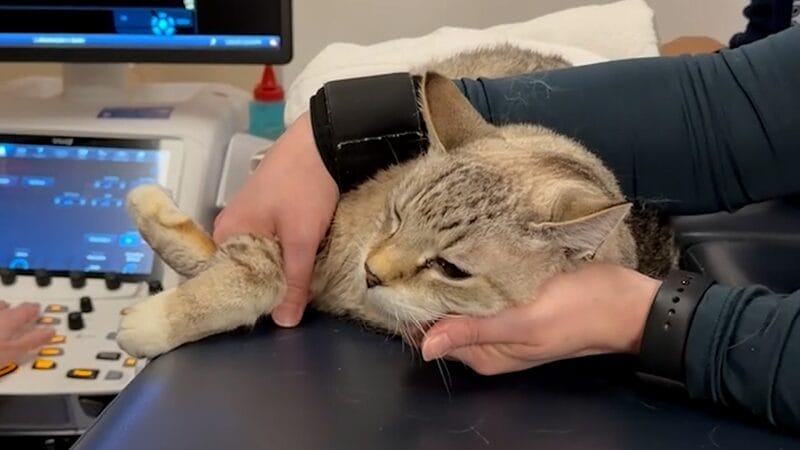
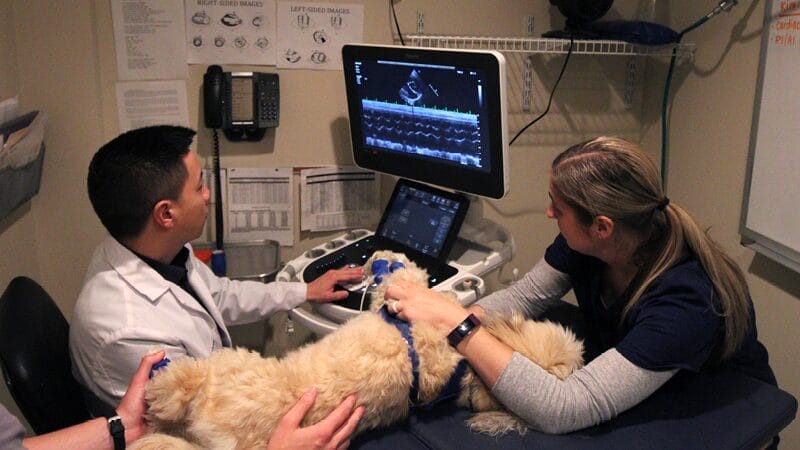
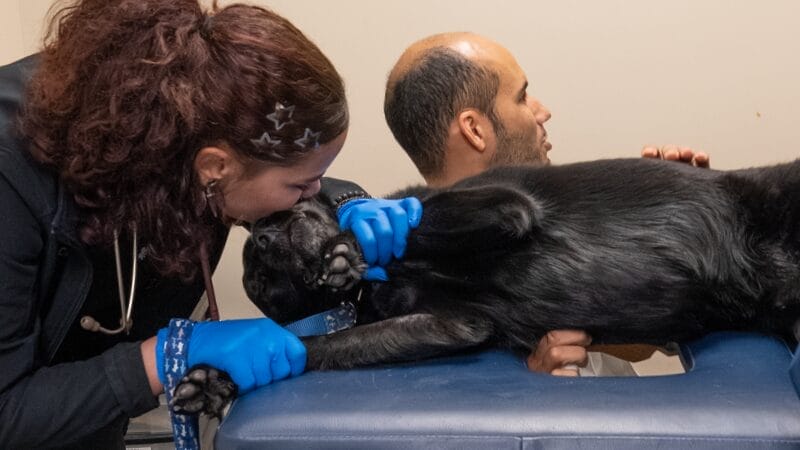
Your pet will usually lie on their side on a padded table in one of our comfortable cardiology suites. Typically, we prepare your pet’s fur with alcohol and a special gel to ensure good contact between the ultrasound probe and their skin, which helps the cardiologist obtain clear images. We do not routinely clip or shave fur for echocardiograms. However, in some cases, a small area of fur on the chest may need to be clipped to improve contact with the skin. To perform the echocardiogram, our cardiologist gently moves the probe across the chest to capture images from different angles.
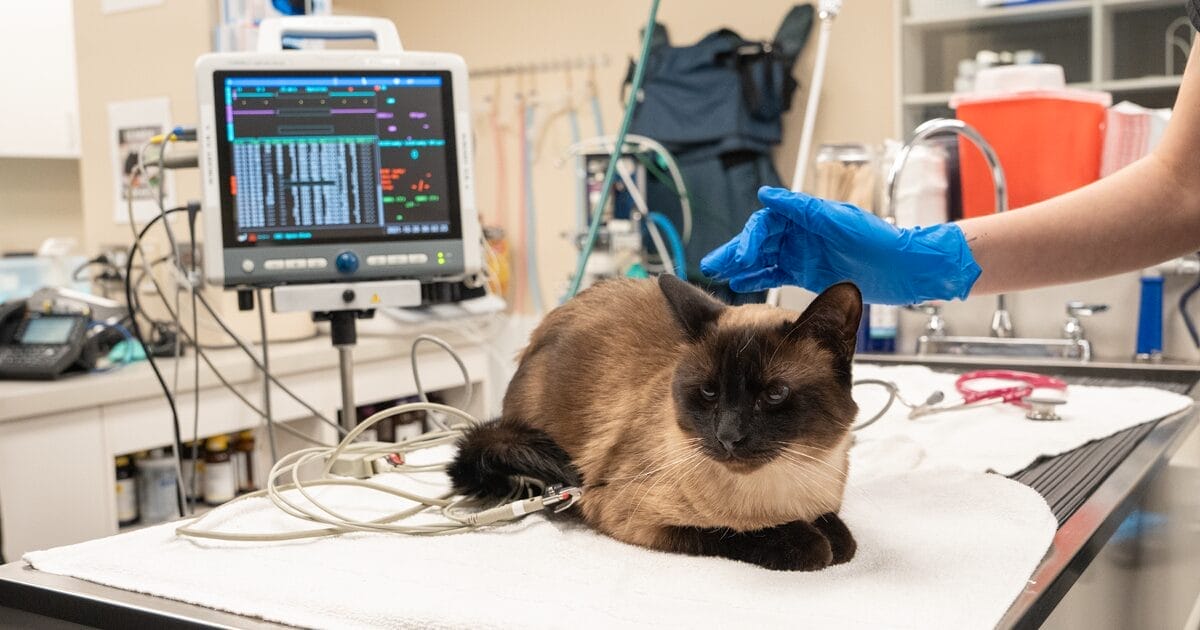
Throughout the exam, your pet is monitored closely by our experienced veterinary technicians and assistants. Our team provides plenty of comforting attention along the way, with pets, scratches, and reassurance to help your pet feel safe and supported. Many pets remain calm with the gentle handling and reassurance our compassionate team provides. Because the risks are minimal and the procedure is well-tolerated, our veterinary team can confidently prioritize your pet’s wellbeing while gathering the information needed for accurate diagnosis.
An echocardiogram usually takes 30 to 60 minutes, depending on the complexity of the case. Our cardiologists take the time needed to ensure a thorough, accurate assessment.
What Does an Echocardiogram Show?
An echocardiogram provides information that other tests cannot, including:
- Whether the heart chambers are enlarged
- How efficiently the heart is pumping blood
- Whether heart valves are leaking or narrowed
- The presence of abnormal blood flow patterns
- Fluid accumulation around the heart or lungs
This information helps our cardiologists diagnose conditions such as valve disease, cardiomyopathies, congenital heart defects, and other cardiac abnormalities with precision and confidence.
While echocardiography is extremely valuable, MedVet’s cardiologists often use it alongside other diagnostic tests to give a complete picture of your pet’s heart health. These may include:
- Chest X-rays to evaluate the heart and lungs
- Electrocardiography (ECG) to assess heart rhythm
- Blood pressure measurement
- Blood tests to evaluate overall health and organ function
Each test provides different information, and together they help our team guide treatment decisions with confidence and expertise.
How Are Echocardiogram Results Used?
One of the most valuable aspects of echocardiography is how it guides care. Based on the results, our cardiologists may:
- Recommend starting or adjusting medications
- Suggest lifestyle or activity modifications
- Determine how frequently follow-up exams are needed
- Monitor how well current treatments are working
In many cases, echocardiography isn’t a one-time test. Our team may recommend repeat studies over time to track disease progression or treatment response, ensuring your pet receives the most current and effective care throughout their journey.
Advanced Echocardiography Techniques at MedVet
Veterinary cardiology continues to evolve, and MedVet stays at the forefront of these advances. Our cardiologists use state-of-the-art imaging techniques to gain even more insight into heart function, including advanced measurements that assess subtle heart muscle motion and specialized views that provide greater detail.
For pet owners, the key takeaway is that standard echocardiography remains an excellent and reliable test for diagnosing and managing heart disease. The advanced techniques available at MedVet are simply additional tools our specialists use when appropriate to ensure the most accurate diagnosis possible.
Why Choose MedVet for Your Pet’s Echocardiogram?
Obtaining the precise views necessary for a complete assessment—and interpreting those images accurately—requires specialized training and experience. Subtle differences in heart structure or motion can significantly affect diagnosis and treatment decisions.
At MedVet, our board-certified veterinary cardiologists have advanced training in cardiac imaging and heart disease management. We personally perform your pet’s echocardiogram and meet with you immediately afterward to discuss the findings. Unlike diagnostic imaging centers where images are obtained and sent elsewhere for interpretation, we capture the images ourselves and translate the findings into clear explanations and actionable treatment plans during your visit.
If cardiac disease is diagnosed, we become your dedicated partner for your pet’s heart health. We work closely with your primary care veterinarian to ensure seamless communication and coordinated care throughout your pet’s journey, serving as your direct point of contact for all cardiac concerns.
If your pet needs an echocardiogram, we’re here to provide clarity, compassionate care, and proactive solutions. Our specialists will answer your questions, walk you through our findings in clear, easy-to-understand terms, and create a personalized care plan to support your pet’s comfort and long-term wellbeing.
Find a MedVet cardiologist near you.
FAQs
Is an echocardiogram painful for pets?
No. Echocardiography is painless, non-invasive, and usually doesn’t require sedation.
How long does a pet echocardiogram take?
Most exams take 30–60 minutes, depending on the complexity of the case.
Does a heart murmur mean my pet has heart disease?
Not always. An echocardiogram helps determine whether a murmur is related to structural heart disease and how serious it may be.
Will my pet need repeat echocardiograms?
Some pets benefit from follow-up exams to monitor heart disease or assess how well treatment is working.
Learn More
Our board-certified veterinary cardiologists deliver advanced, compassionate heart care for pets.
Veterinary CardiologyShare




Contents
Learn More
Our board-certified veterinary cardiologists deliver advanced, compassionate heart care for pets.
Veterinary Cardiology