
Heart Arrhythmias in Dogs and Cats: Signs, Causes, and Treatment
Heart arrhythmias in dogs and cats can affect blood flow and energy levels. Learn the signs, causes, diagnosis, and treatment options.
An arrhythmia is an abnormal heartbeat caused by disruptions to the heart’s electrical system. These disruptions can cause the heart to either beat too fast, too slow, or irregularly. Arrhythmias reduce how efficiently blood is pumped throughout the body which, in turn, can lead to clinical signs such as weakness, lethargy, fainting, congestive heart failure, and in some rare cases, sudden death.
How the Heart’s Electrical System Works
The heart’s normal rhythm begins in a group of specialized cells called the sinus node, located at the top of the heart (upper right atrium). This node generates an electrical signal that travels through the top chambers of the heart (atria) to the node in the middle of the heart called the atrioventricular node. From there, the signal moves through the bottom chambers of the heart (ventricles) along the His-Purkinje system. As the signal moves throughout the heart, it causes the heart chambers to contract and pump blood.
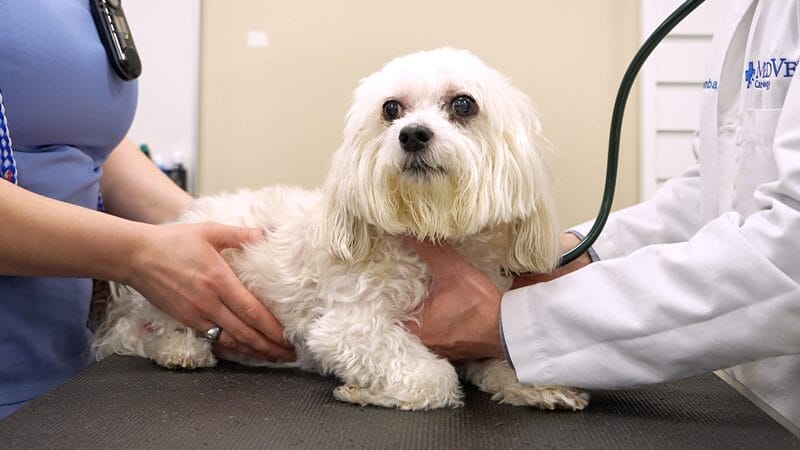
Disruption of this electrical sequence leads to an arrhythmia. Arrhythmias may be detected during a physical examination by listening to the heart with a stethoscope or by feeling pulses. Some arrhythmias are intermittent and may not be detected on routine physical examination.
Types of Arrhythmias in Pets
Arrhythmias are generally categorized based on whether the heart beats too fast, too slowly, or irregularly.
Tachyarrhythmias (Fast Heart Rhythms)
When the heart rate is too fast, the heart does not have enough time to fill with blood between beats, reducing the amount of blood pumped with each contraction. Common fast arrhythmias include:
- Atrial fibrillation
- Ventricular tachycardia
Bradyarrhythmias (Slow Heart Rhythms)
When the heart rate is too slow, the heart may not pump blood often enough to meet the body’s needs, resulting in decreased overall blood flow and oxygen delivery to tissues. Common slow arrhythmias include:
- Sinus node dysfunction (sick sinus syndrome)
- Third degree atrioventricular block
Premature Beats
Premature beats are extra heartbeats coming from either the top chambers (atria) or bottom chambers (ventricles) that occur earlier than expected. While isolated premature beats are often benign, frequent premature beats may require treatment.
What Are the Possible Signs of an Arrhythmia?
Some pets with arrhythmias show no clinical signs or only subtle signs, particularly if the abnormal rhythm is brief. Pets with other arrhythmias, however, will show more significant clinical signs, such as:
- Weakness and lethargy
- Exercise intolerance
- Fainting or near-fainting episodes
- Difficulty breathing or rapid breathing
- Sudden death (rare)
If your pet experiences any of these signs or any other signs of concern, please contact your veterinarian or an emergency veterinary hospital like MedVet.
What Causes Arrhythmias in Pets?
Arrhythmias can occur secondary to heart disease or from conditions affecting other parts of the body. Possible causes include:
- Heart disease
- Electrolyte abnormalities
- Abdominal disease
- Inflammatory or infectious diseases
- Autonomic imbalance (sympathetic vs. vagal)
- Drugs and toxins
- Cancer
Arrhythmias can occur in any dog or cat, but certain breeds are predisposed, including:
- Boxer
- Doberman Pinscher
- Great Dane
- Irish Wolfhound
- German Shepherd
- Miniature Schnauzer
How Are Arrhythmias in Cats and Dogs Diagnosed?
Veterinarians use several diagnostic tools to identify and evaluate the presence of arrhythmias, as well as determine their cause.
Electrocardiography (ECG/EKG)
An ECG is a test that records the electrical activity of the heart, used to determine the type of any arrhythmia present. This test typically takes less than 10 minutes and involves attaching small electrodes to your pet’s skin.
Echocardiography
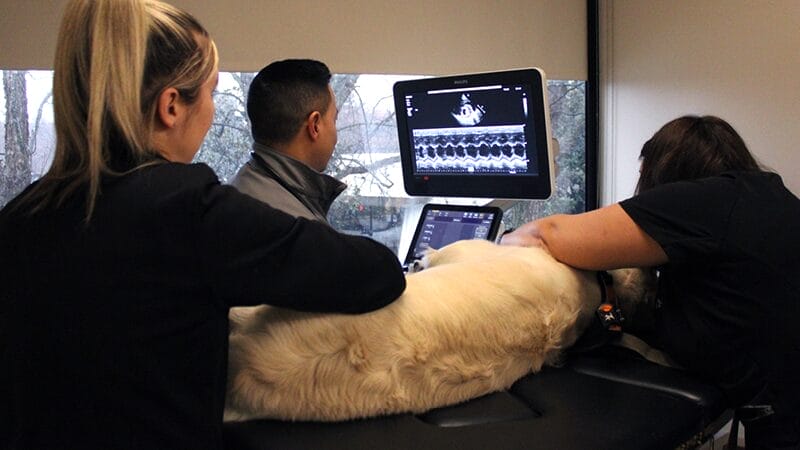
Echocardiography, performed by a board-certified veterinary cardiologist, is an ultrasound of the heart, used to evaluate the presence of structural cardiac disease. This test typically takes less than 30 minutes and involves using an ultrasound probe on the chest to view the heart.
Holter Monitoring
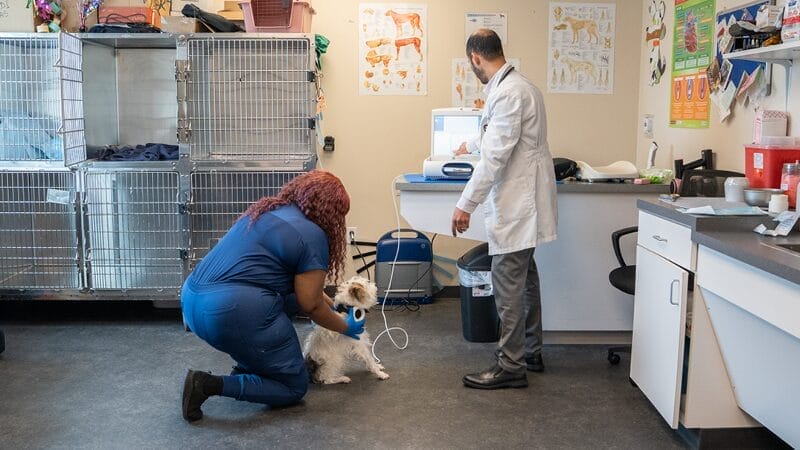
A Holter monitor is a portable, wearable ECG that records for a prolonged period (typically 24-48 hours). It is used to screen for intermittent arrhythmias, determine the frequency of arrhythmias, and monitor response to treatment.
Additional Diagnostics
Additional tests may include:
- Chest X-rays
- Blood pressure
- Laboratory testing
- Abdominal ultrasound
What Treatment Options Are Available for Pet Arrhythmias?
Treatment depends on the type and severity of the arrhythmia. Mild arrhythmias may not require treatment. For more significant arrhythmias, treatment options include:
Anti-Arrhythmic Medications
Medications are commonly used to manage certain tachyarrhythmias. Your veterinarian will select the most appropriate medication based on the arrhythmia present and your pet’s overall health.
- Mexiletine
- Sotalol
- Amiodarone
- Diltiazem
- Digoxin
- Atenolol
Pacemaker Implantation
Pacemakers are used to manage certain bradyarrhythmias. A veterinary cardiologist will determine whether a pacemaker is indicated. This procedure can be done minimally invasively (transvenous) in most dogs, but a surgical approach (epicardial) is needed in cats and in some dogs.
Electrophysiology Study/Cardiac Ablation
Cardiac ablation can be used to manage certain tachyarrhythmias that are not responsive to standard treatment. A veterinary cardiologist will determine whether this procedure is indicated.
Additionally, addressing any underlying heart disease or systemic condition is essential.
What to Expect After Your Pet’s Arrhythmia Diagnosis
Living with an arrhythmia varies depending on the type and severity.
Pets Not Requiring Treatment
Pets with mild arrhythmias generally require periodic rechecks, which may include physical examination, electrocardiogram, and/or a Holter monitor.
Pets on Medication
Pets requiring medication (s) generally require rechecks every 3-6 months to ensure effectiveness and tolerance of the medication(s). Rechecks may include physical examination, electrocardiogram, Holter monitor, and blood tests.
Pets with Pacemakers
Pets with a pacemaker generally require rechecks every 6-12 months to ensure appropriate functioning of the pacemaker and to screen for pacemaker complications (uncommon).
Working With a Veterinary Cardiologist
A board-certified veterinary cardiologist has advanced training in diagnosing and managing complex heart conditions. They work closely with your family veterinarian to provide coordinated, comprehensive care.
By combining the expertise of your primary veterinarian with the specialized knowledge of a cardiologist, your pet receives the most thorough cardiac care possible, focused on improving quality of life and minimizing complications. With appropriate management, many pets with arrhythmias live comfortable, active lives.
Find a MedVet cardiologist near you.
FAQs
What are the signs of arrhythmia in dogs and cats?
Some pets show no signs, especially if the arrhythmia is brief. Others may experience weakness, lethargy, exercise intolerance, fainting, or difficulty breathing. In rare cases, arrhythmias can lead to sudden death.
What causes heart arrhythmia in pets?
Arrhythmias can be caused by underlying heart disease or other conditions such as electrolyte imbalances, infections, inflammation, toxins, or cancer. Certain breeds, including Boxers and Doberman Pinschers, may also be more predisposed.
How are arrhythmias in pets diagnosed?
Veterinarians use tests like an electrocardiogram (ECG) to evaluate heart rhythm. Additional diagnostics may include echocardiography (heart ultrasound), Holter monitoring, bloodwork, and imaging to determine the underlying cause.
Can arrhythmias in dogs and cats be treated?
Yes—treatment depends on the type and severity. Some mild arrhythmias don’t require treatment, while others may be managed with medications, pacemaker implantation, or specialized procedures like cardiac ablation.
Learn More
Our board-certified veterinary cardiologists deliver advanced, compassionate heart care for pets.
Veterinary CardiologyShare




Contents
Learn More
Our board-certified veterinary cardiologists deliver advanced, compassionate heart care for pets.
Veterinary Cardiology