
Understanding Vomiting in Dogs and Cats: Recognizing When It’s Serious (and When It’s Not)
Vomiting in dogs and cats can be harmless—or serious. Learn when to monitor at home and when emergency care is needed.
Discovering your dog or cat has vomited sends most pet owners into worry mode—and rightfully so. You may wonder: What triggered this? Is my pet in danger? Can I handle this myself, or do we need professional help?
The reality might ease your mind: Isolated vomiting episodes are often resolved naturally without requiring a trip to the veterinarian. Still, certain red flags signal the need for urgent medical care. Our MedVet team breaks down how to distinguish between temporary stomach upset and situations requiring immediate professional intervention.
Why Do Pets Vomit?
Vomiting is your pet’s way of expelling irritants, toxins, or substances their body can’t process. Understanding the difference between vomiting and regurgitation helps you identify what’s happening.
Vomiting vs. Regurgitation: Know the Difference
- Vomiting: Active retching with abdominal contractions and nausea—your pet may drool, pace, or show discomfort beforehand.
- Regurgitation: Passive. Undigested food comes back up without warning or effort, often shortly after eating. Repeated regurgitation may signal esophageal disorders or swallowing difficulties—contact your veterinarian.
Multiple factors can trigger vomiting:
- Rich or inappropriate foods: Eating too fast, raiding the trash, or overindulging in fatty table scraps commonly causes stomach upset. Learn which human foods are safe for pets.
- Abrupt food transitions and food allergies: Switching foods cold turkey can trigger vomiting—introduce changes gradually over one to two weeks. Food allergies can develop suddenly, even to ingredients your pet has eaten long-term. Learn more about food allergies in dogs and food allergies in cats.
- Hairball formation: Cats naturally groom themselves, but excessive hair ingestion sometimes requires expulsion. True hairballs—large, cylindrical masses of compacted fur—occur occasionally, especially in long-haired cats. However, frequent vomiting is not normal, even if it contains some fur. If your cat regularly vomits food with minimal hair, this isn’t a “hairball” issue but may indicate an underlying digestive problem requiring veterinary attention.
- Travel-induced nausea: Car rides trigger motion sickness in many pets, particularly young animals or inexperienced travelers. Learn tips for traveling with your pets.
- Parasitic infections: Internal parasites rank among the top causes of vomiting in young dogs and cats.
- Poisonous substances: Human medications like ibuprofen, household products and certain plants, especially lilies, sago palms, and Amanita mushrooms, which can be deadly to cats. Additionally, many other plants, even if not explicitly poisonous, commonly cause vomiting and GI upset through mechanical irritation from leaves or chemicals in plant tissues.
- Bacterial, viral, or fungal illness: Infectious agents attack the gastrointestinal system, producing acute symptoms including vomiting.
- Swallowed objects: Non-food items like toys, fabric, string, or bones create blockages or stomach irritation.
- Systemic diseases: Kidney failure, liver dysfunction, pancreatitis, inflammatory bowel disease, feline hyperthyroidism, and malignancies frequently manifest through vomiting.
A single vomiting episode in an otherwise healthy, energetic adult pet often resolves on its own. The key is knowing which patterns signal it’s time to call your veterinarian.
Which Pets Face Greater Risk?
Some animals are more vulnerable to vomiting complications and require earlier intervention:
- Young and senior pets: Puppies, kittens, and seniors have limited reserves—rapid fluid loss and dropping blood sugar become dangerous quickly.
- Chronic health conditions: Pets with diabetes, kidney disease, liver disease, heart conditions, or weakened immunity deteriorate faster when they can’t maintain nutrition or hydration.
- Recent medical changes: Surgery, anesthesia, or new medications—particularly pain relievers, antibiotics, and certain supplements—commonly upset digestion. Alert your veterinarian if vomiting begins after medical procedures or prescription changes.
True Emergencies Requiring Immediate Care
These life-threatening situations require immediate action. Don’t wait—get your pet to emergency care right away if you suspect:
- Confirmed or suspected poisoning: Act immediately if your pet accessed toxic substances—even before signs appear. Call the Pet Poison Helpline at 855.764.7661 or rush to emergency care. Minutes matter with many poisons.
- Foreign body obstruction: Swallowed objects block the digestive tract, preventing food and fluid movement. This surgical emergency causes persistent vomiting, inability to keep water down, painful abdomen, and extreme lethargy.
- Gastric Dilatation-Volvulus (Bloat): Large, deep-chested dog breeds face particular risk when the stomach fills with gas and rotates. Watch for dry heaving (attempting to vomit without producing anything), swollen belly, restlessness, and collapse. Every second counts—seek emergency care immediately.
Interpreting the Signs: Three Levels of Response
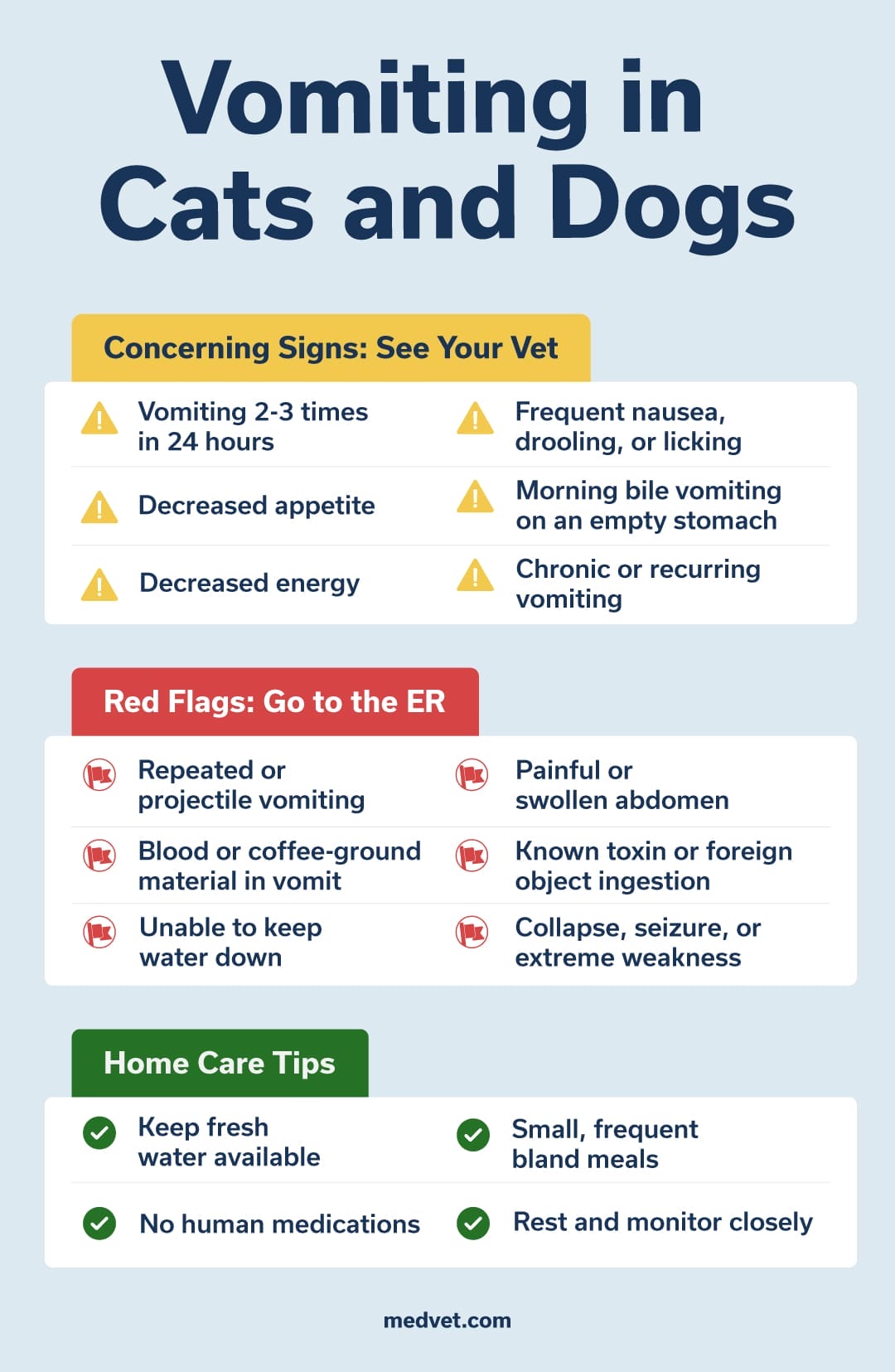
Not all vomiting requires emergency intervention. Understanding sign severity helps you decide whether to monitor at home, schedule an appointment, or seek immediate care:
When Observation at Home is Appropriate
Consider home monitoring when your pet displays:
- One isolated vomiting incident without repetition
- Typical activity levels and mental alertness
- Willingness to eat and drink within hours
- Vomit containing clear fluid or yellow bile, no blood present
- Absence of additional worrying signs
- Regular bathroom habits continuing normally
Veterinary Appointment is Needed Soon
Arrange professional evaluation within a day if noting:
- Multiple episodes (two to three) across 24 hours
- Reduced interest in meals or food refusal
- Lower energy or decreased enthusiasm for activities
- Regular morning vomiting of yellow bile on empty stomach
- Heavy salivation or constant lip movements
- Nausea indicators like repetitive swallowing or pacing
- Chronic or recurrent vomiting that occurs weekly or intermittently over months
"An occasional vomiting episode may not be serious—but repeated vomiting, blood, or inability to keep water down should never be ignored."
– Emily Klosterman, DVM, DACVIM (SAIM)
Emergency Intervention is Required Now
Rush your pet to a veterinarian for:
- Frequent vomiting (three-plus episodes) in rapid succession
- Complete inability to retain water
- Bloody vomit—either bright red or resembling coffee grounds
- Forceful, projectile-style vomiting
- Fecal odor in vomit
- Extreme exhaustion, muscle weakness, or unconsciousness
- Whitish or colorless gums
- Tender, swollen, or painful belly area
- Neurological signs: seizures, confusion, disorientation
- Dehydration evidence (sticky gums, hollow eyes, skin remaining tented when pinched)
- Known toxic ingestion or foreign object consumption
- High-risk pets showing any concerning changes
Managing Mild Cases at Home
If your veterinarian approves home care for mild signs, follow these steps:
Reset the Digestive System
- Temporary fasting (healthy adults only): Withhold food for 6–12 hours to allow the stomach to recover. Never fast puppies, kittens, toy breeds, or diabetic pets without explicit veterinary instruction—they can develop dangerous low blood sugar rapidly.
- Gradual food reintroduction: After fasting, offer small portions of bland, easily digestible food every 2-3 hours:
- Small pets: 1-2 tablespoons
- Larger pets: 1/4-1/2 cup per feeding
- Bland diet options: Plain boiled chicken or turkey breast (absolutely no seasonings), white rice or plain boiled potato, extra-lean ground beef, thoroughly drained, veterinary prescription digestive formulas. If tolerated, slowly increase portion sizes over 24-48 hours, then gradually transition back to regular food over several days.
Prevent Dehydration
Vomiting strips away fluids and electrolytes your pet’s organs require. Support hydration through:
- Offering small amounts of water frequently (every 30 minutes works better than one large bowl)
- Offer ice cubes to pets who immediately vomit after drinking
- Diluted, low-sodium broth options (verify no onion, garlic, or excessive salt)
- Moistened food for cats, who often drink too little when ill
Contact your veterinarian immediately if your pet rejects water or dehydration signs appear. Under-skin or intravenous fluid therapy might become necessary to avoid serious complications.
Important Safety Reminders
Create a calm, quiet environment where your pet can rest comfortably. Limit physical activity and avoid car trips unless necessary as motion worsens nausea and can trigger additional vomiting.
Never give your pet human medications without veterinary approval. Many over-the-counter digestive remedies that seem harmless to humans can be dangerous or even deadly to pets, especially cats. Always consult your veterinarian before administering any medication or remedy.
Similarly, never induce vomiting at home unless specifically instructed by your veterinarian or Pet Poison Control. Some toxins cause additional damage when brought back up, and incorrect techniques can lead to aspiration pneumonia, a serious and potentially fatal complication.
Finally, stay vigilant even when signs seem mild. Conditions can deteriorate quickly, and since pets can’t verbalize how they’re feeling, close observation is essential. Watch for any worsening signs and don’t hesitate to contact your veterinarian if something doesn’t seem right.
When your pet experiences severe vomiting or emergency signs and your regular veterinarian isn’t available, MedVet is here to help. Most of our hospitals operate 24/7/365 with board-certified emergency doctors and specialists ready to provide expert care when your companion needs it most.
Visit our Pet Care Resources library for more pet health and safety information.
FAQs
Is it normal for dogs and cats to vomit occasionally?
Yes. An isolated vomiting episode in an otherwise healthy, alert pet can occur due to mild stomach upset, eating too quickly, or hairballs in cats. Monitor closely and contact your veterinarian if vomiting continues or other signs develop.
When should vomiting be considered an emergency?
Vomiting is an emergency if it is frequent, forceful, contains blood, or if your pet cannot keep water down. Other red flags include lethargy, abdominal pain, collapse, or known toxin or foreign object ingestion.
Can I give my pet something at home to stop vomiting?
Never give human medications unless directed by a veterinarian. In mild, vet-approved cases, short fasting and a bland diet may help—but ongoing or worsening vomiting always requires professional evaluation.
How can I tell if my pet is becoming dehydrated?
Signs of dehydration include sticky or dry gums, sunken eyes, weakness, and skin that doesn’t snap back quickly when gently lifted. Dehydration can worsen rapidly and often requires veterinary treatment.
Learn More
Veterinary internal medicine specialists treat complex internal systems: the gastrointestinal tract, kidneys, central nervous system, and endocrine system.
Veterinary Internal MedicineShare




Contents
Learn More
Veterinary internal medicine specialists treat complex internal systems: the gastrointestinal tract, kidneys, central nervous system, and endocrine system.
Veterinary Internal Medicine