Chronic Kidney Disease in Dogs and Cats: What Pet Owners Need to Know
Chronic kidney disease is common in aging pets—but with early detection, proper diet, and monitoring, many pets live well for years.
Chronic kidney disease (CKD) is a common condition in dogs and cats, especially as they age. While a diagnosis can feel overwhelming, we want you to know that many pets with CKD live comfortable, meaningful lives for months or even years with proper care.
The kidneys perform vital functions—filtering waste products from the blood, balancing electrolytes, and conserving water. CKD occurs when the kidneys gradually lose their ability to do these jobs effectively. In fact, clinical kidney failure isn’t detected until more than 75% of normal kidney function has already been lost. While that might sound alarming, understanding how CKD develops and how it’s managed can help you feel more confident and proactive in caring for your pet.
Acute vs. Chronic Kidney Disease
Kidney disease is generally categorized as either acute or chronic:
- Acute kidney disease develops suddenly, often due to dehydration, toxin exposure, infections, or urinary obstruction.
- Chronic kidney disease is a long-term, progressive condition that worsens over time. While CKD is most commonly seen in aging pets, it can also affect younger or middle-aged animals with certain medical conditions, such as protein in the urine or urinary stones. Some pets experience an episode of acute kidney disease and don’t fully recover, ultimately developing CKD. Conversely, pets with CKD can experience acute flare-ups caused by issues like dehydration, urinary tract infections, or urinary stones—leading to a sudden worsening of kidney function on top of their existing disease.
Because CKD progresses gradually, early detection and consistent care are key to slowing its advancement.
Signs of Chronic Kidney Disease
Early in the disease, pets may show few—or no—noticeable signs at home. As kidney function declines, signs may become more apparent and can include:
- Increased thirst and urination
- Decreased appetite
- Weight loss
- Vomiting or nausea
- Lethargy or decreased activity
- Poor quality coat
- Bad breath or oral ulcers (in advanced cases)
Because these signs can be subtle at first, routine wellness exams and bloodwork play an important role in identifying CKD before pets become visibly ill.
How Chronic Kidney Disease Is Diagnosed
Chronic kidney disease is diagnosed through a combination of:
- Bloodwork, particularly kidney values such as creatinine, a natural waste product that builds up in the bloodstream when the kidneys are not filtering properly
- Urinalysis, to evaluate urine concentration and for protein loss
- Blood pressure measurement
- Additional testing, such as urine cultures or imaging, when indicated
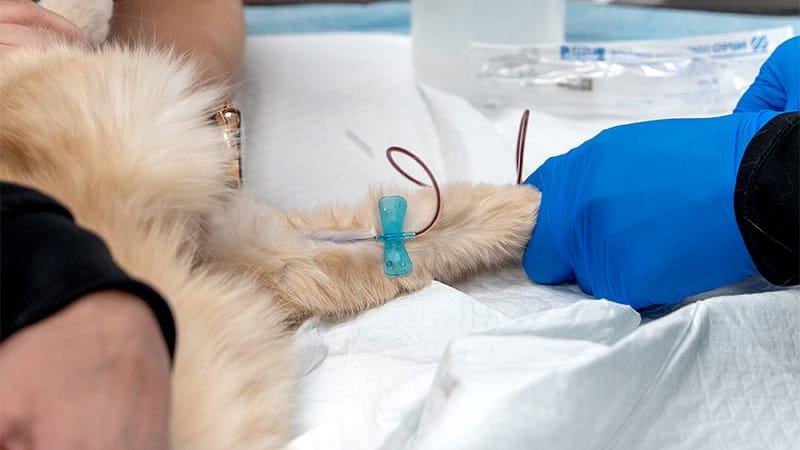
One of the most important tools we use to assess CKD is the IRIS (International Renal Interest Society) staging system. This system helps us determine disease severity, guide treatment decisions, and provide insight into your pet’s long-term prognosis.
Understanding IRIS Stages of Chronic Kidney Disease
IRIS Stage 1: Early or Subclinical Disease
- Kidney disease is present, but blood creatinine levels are still normal
- Few pets are diagnosed at this stage
- Pets often feel normal and can live for years with proper care
IRIS Stage 2: Mild Disease
- Often discovered on routine bloodwork or while evaluating another condition
- Creatinine up to 2.0 mg/dL in dogs and up to 2.8 mg/dL in cats
- Pets may live many months to years, sometimes many years, especially cats
IRIS Stage 3: Moderate Disease
- Pets often begin to feel unwell at home
- Creatinine up to 5.0 mg/dL in both dogs and cats
- Dogs typically survive for months, while cats may live many months to a year with treatment
IRIS Stage 4: Severe Disease
- Creatinine greater than 5.0 mg/dL
- Pets often feel very sick and may require intensive care
- Survival is typically weeks to a few months
Within each stage, pets are further classified based on whether they have protein loss in the urine or high blood pressure. Pets with these additional complications tend to progress more quickly, which is why testing for and treating these conditions is an important part of managing CKD.
Is Chronic Kidney Disease Curable?
Chronic kidney disease is progressive, meaning it cannot be cured and will eventually lead to kidney failure. However, the progression can often be slowed significantly with appropriate treatment and monitoring. Prognosis varies widely and depends on:
- The stage at diagnosis
- How quickly the disease progresses
- Response to dietary changes and medications
- Presence of complications such as high blood pressure or protein loss in the urine
The good news? Many pets with CKD enjoy good quality of life for extended periods with thoughtful, consistent care.
Monitoring Pets with Chronic Kidney Disease
Ongoing monitoring is essential for pets with CKD and typically includes periodic bloodwork, urine testing, and blood pressure checks as recommended by your veterinarian. This approach mirrors many of the principles involved in caring for pets with chronic conditions, consistent with follow-up, early intervention, and close communication with your veterinary team.
Over time, pets with CKD may develop gastrointestinal signs such as vomiting, decreased appetite, or weight loss. Learn about chronic GI conditions including inflammatory bowel disease in pets. Some pets may also develop anemia, which can cause lethargy or reduced interest in food.
Even small changes—such as vomiting, reduced drinking, or decreased appetite—should be addressed promptly. These signs can indicate dehydration or an acute kidney crisis, which requires immediate veterinary attention.
The Role of Diet and Hydration for Pets with Chronic Kidney Disease
Nutrition is one of the most effective ways to manage chronic kidney disease. Pets that consistently eat a commercially formulated kidney diet live longer than those that don’t.
Common veterinary-recommended kidney diets include:
- Hill’s® Prescription Diet k/d®
- Purina® Pro Plan® Veterinary Diets NF Kidney Function®
- Royal Canin® Renal Support
There is no single “best” kidney diet—what matters most is finding one your pet will eat. Many pet owners choose a diet from the same brand their pet already enjoys or select an option readily available through their veterinarian or reputable online retailers like Chewy.
If your pet refuses a prescription kidney diet, home-cooked diets formulated to be low in protein and phosphorus may be an option under veterinary guidance. And if your pet won’t accept any of these options, remember it’s always better for them to eat a non-kidney diet than to not eat at all.
Pets with kidney disease have difficulty conserving water and often urinate more frequently. Because of this, water should never be restricted.
Encouraging hydration can help support kidney function and overall comfort. Helpful strategies include:
- Providing multiple water bowls throughout the home
- Using pet water fountains
- Flavoring water with low-sodium broth (as recommended by your veterinarian)
Maintaining hydration is one of the simplest yet most important ways to support a pet with CKD. In some cases, veterinarians may prescribe subcutaneous (SQ) fluids to help keep pets adequately hydrated, particularly during periods when they’re not drinking enough on their own. Feeding tubes represent another option for delivering fluids, though this is a more invasive intervention that requires anesthesia—which can be challenging for kidneys already compromised by disease—so it’s rarely relied upon in practice.

Treatment Options for Chronic Kidney Disease
In addition to dietary management, treatment for CKD often focuses on:
- Controlling blood phosphorus levels
- Managing protein loss in the urine
- Treating high blood pressure
- Dialysis for severe or complex cases
These goals are typically achieved through medications given at home, followed by recheck appointments to assess response and adjust treatment as needed.
Screening for and treating urinary tract infections is also an important part of maintaining health in pets with CKD, as infections can worsen kidney function.
While a diagnosis of chronic kidney disease can feel overwhelming, please know that many pets continue to enjoy good quality of life with proper care. By working closely with your veterinary team, following recommended monitoring schedules, and addressing changes early, you can help support your pet every step of the way.
If you have concerns about your pet’s kidney health or notice changes in their behavior, appetite, or drinking habits, we’re here to help guide you through the next steps.
Visit our Pet Care Resources library for more pet health and safety information.
FAQs
How long can dogs and cats live with chronic kidney disease?
Life expectancy varies widely based on disease stage, progression rate, and response to treatment. Some pets live for months, while others live for years with proper care.
Can chronic kidney disease be cured?
No, CKD is progressive and not curable. However, treatment and monitoring can slow progression and improve quality of life.
Why is a kidney diet so important for pets with CKD?
Prescription kidney diets help reduce stress on the kidneys and have been shown to help pets live longer than those not eating these diets.
Should I limit my pet’s water intake if they have kidney disease?
No. Water should never be restricted. Pets with CKD need increased access to water to prevent dehydration and support kidney function.
Learn More
Veterinary internal medicine specialists treat the gastrointestinal tract, kidneys, respiratory tract, liver, and endocrine system.
Veterinary Internal MedicineShare




Contents
Learn More
Veterinary internal medicine specialists treat the gastrointestinal tract, kidneys, respiratory tract, liver, and endocrine system.
Veterinary Internal Medicine