What Is a Pet Emergency — And When to Head to the Veterinary ER vs. Your Regular Vet
Recognize pet emergencies and when to visit the ER vs. your regular veterinarian—act fast when it matters most.
As a pet parent, you’re tuned in to your furry family member’s every quirk and habit. So when something feels off, worry can quickly set in. The big question: Is this something that can wait for your regular veterinary appointment, or does it require immediate emergency care?
Understanding how to recognize true medical emergencies can help you make confident, potentially life-saving decisions for your pet. At MedVet, we’re ready to guide you through these uncertain moments with compassionate, expert care.
What Counts as a Pet Medical Emergency?
A genuine pet emergency is any sudden medical situation where delayed treatment could seriously harm your pet’s health, cause unnecessary suffering, or even threaten their life. While your family veterinarian handles wellness visits and routine care during office hours, emergency situations can’t wait. These are conditions where time truly matters — where waiting even a few hours could mean the difference between a full recovery and a devastating outcome.
Since pet health crises don’t follow a 9-to-5 schedule, MedVet emergency hospitals stay open around the clock, every single day of the year. No appointment is necessary when your pet needs urgent help.

How to Tell If Your Pet Needs Emergency Care Right Now
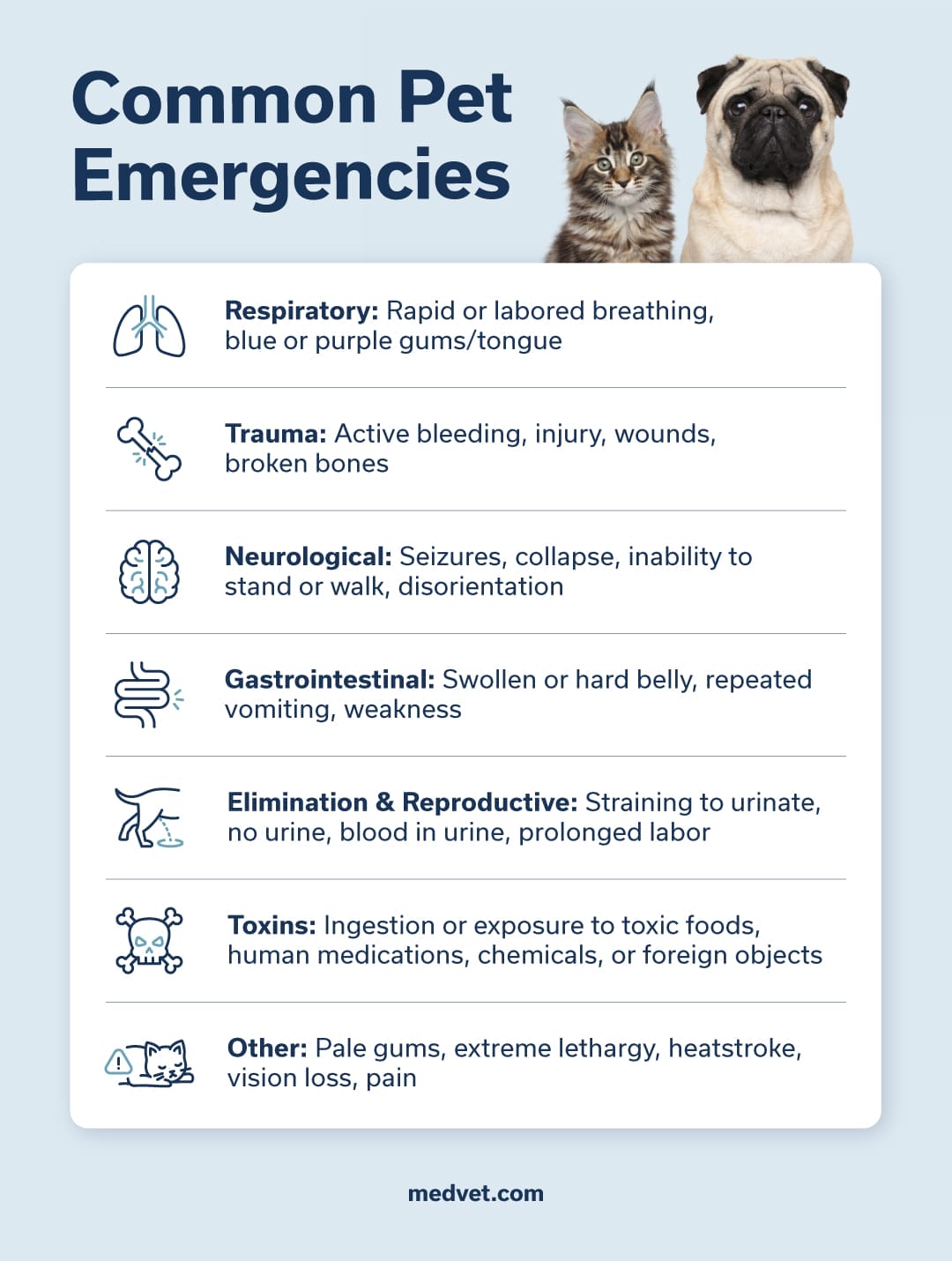
While every animal is unique, certain signs should always send you straight to a veterinary emergency hospital. Trust your instincts if you notice any of these warning signs in your dog or cat:
Respiratory Distress
- Struggling to breathe, gasping for air, or breathing with an open mouth
- Rapid, labored breathing or unusual chest movements
- Blue or purple-tinged gums or tongue
Bleeding and Physical Trauma
- Active bleeding that won’t stop after several minutes of pressure
- Any injury from being hit by a vehicle
- Serious wounds from falls, fights, or accidents
- Visible broken bones or inability to support weight
Neurological Red Flags
- Seizures (especially if they last more than a couple minutes or occur in clusters)
- Sudden collapse or fainting episodes
- Inability to stand, walk, or maintain balance
- Extreme disorientation or behavior that seems completely unlike your pet
Gastrointestinal Crises
- A swollen, hard, or painful belly (especially in large-breed dogs)
- Repeated vomiting, particularly with blood present
- Multiple episodes of vomiting combined with weakness or lethargy
- Dry heaving or unproductive attempts to vomit
Elimination and Reproductive Emergencies
- Straining repeatedly to urinate with little or no urine produced (critical in male cats)
- Visible blood in urine
- Prolonged labor or obvious difficulty delivering puppies or kittens. Learn more about pet pregnancy.
Toxic Exposures and Ingestions
- Eating chocolate, xylitol, grapes, raisins, or other foods that are toxic to pets. Our guide to foods your pet can eat and those to avoid offers more information.
- Consuming human medications, household cleaners, or chemicals. Check out more information on household items that are toxic to your pet.
- Eating objects that don’t belong in their digestive system — socks, toys, bones, fabric, or other items that can cause life-threatening gastrointestinal blockages.
Other Critical Signs
- Gums that appear white, gray, or distinctly pale
- Extreme lethargy or complete unresponsiveness
- Signs of heatstroke: excessive panting, drooling, red gums, vomiting
- Sudden loss of vision
- Unexplained severe pain or distress
Still Unsure? Here’s What to Do
Animals instinctively mask illness and pain — it’s a survival mechanism that makes spotting problems challenging. If your pet is acting significantly different than usual, seems uncomfortable, or your gut tells you something is wrong, don’t second-guess yourself. A quick call to an emergency hospital can help you determine next steps. It’s always better to check and be reassured than to wait and risk a worsening situation.
Understanding Your Options: Where to Go and When
Knowing which type of veterinary care matches your pet’s needs saves precious time and reduces stress.
Your Primary Veterinarian
Think of your family veterinarian as your pet’s primary care physician. They’re your partner for:
- Regular wellness checkups and vaccinations
- Managing ongoing conditions like diabetes, allergies, or arthritis
- Routine procedures and minor health concerns
- Building a complete medical history for your pet
If your pet has mild signs and your regular veterinarian can see them within a reasonable timeframe, that’s often the ideal starting point. However, most primary care practices keep traditional business hours and may not have onsite capabilities for critical emergencies.
Emergency Veterinary Hospitals
Emergency veterinary hospitals exist specifically to handle urgent and life-threatening situations that can’t wait. At MedVet, our emergency services include:
- Immediate care during nights, weekends, and holidays
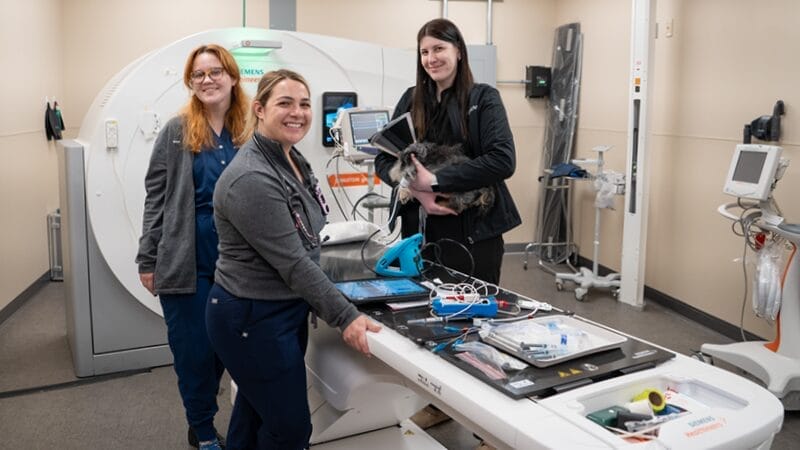
- Advanced diagnostic equipment including CT scans, MRI, and ultrasound
- Onsite surgical suites and intensive care facilities
- Blood transfusion capabilities and emergency medications
- Direct access to board-certified specialists in multiple disciplines
Our emergency teams are specially trained to rapidly assess your pet’s condition and begin treatment. Because we have specialists in cardiology, neurology, internal medicine, and other fields working under the same roof, complex cases receive comprehensive, coordinated care. Once your pet is out of crisis, we send complete medical records to your primary veterinarian to ensure seamless follow-up care.
Urgent Care: The In-Between Option
Some MedVet locations also provide urgent care services. This is perfect for concerns that need attention soon but aren’t immediately life-threatening. Consider urgent care for issues like:
- Minor wounds, small cuts, or skin infections
- Mild digestive upset without severe signs
- Ear infections causing discomfort but not severe pain
- Broken toenails or mild limping
- Urinary signs without complete inability to urinate
Urgent care offers walk-in convenience during extended hours. If our team determines your pet’s condition is more serious than initially apparent, we can seamlessly transition to emergency-level care.
Your Visit to MedVet Emergency: What Happens
Walking into an emergency hospital can feel overwhelming, but here’s what you can expect:
- Immediate Triage: A veterinary professional will quickly assess your pet’s condition to determine urgency. Critical patients receive instant attention.
- Thorough Evaluation: Our team performs necessary diagnostics and examinations to understand what’s happening with your pet.
- Clear Communication: We believe in transparency. You’ll receive plain-language explanations of your pet’s condition, recommended treatments, and expected outcomes.
- Coordinated Follow-Up: After stabilization, we send comprehensive records to your regular veterinarian and provide you with detailed at-home care instructions.
We recognize how frightening pet emergencies can be. Our entire team is committed to supporting you emotionally while providing exceptional medical care for your companion.
Be Prepared for Veterinary Medical Emergencies
A little preparation goes a long way when emergencies happen:
- Research and save contact information for your nearest 24-hour emergency hospital
- Keep a pet first aid kit in your home and car
- Have a carrier or plan for safely transporting your pet if they’re injured
- Store your pet’s medical records in an easily accessible place
- Don’t hesitate to call ahead — emergency hospitals can provide immediate guidance over the phone
Making the Right Choice for Your Pet
The key to handling pet health concerns is matching the severity of signs with the appropriate level of care. Life-threatening signs — difficult breathing, severe bleeding, neurological problems, suspected poisoning, or major trauma — require immediate emergency hospital care. Don’t wait for regular office hours.
For concerning but less critical signs during times when your regular veterinarian is unavailable, urgent care provides timely professional attention. And for mild issues that can wait, scheduling with your primary veterinarian ensures continuity of care.
At MedVet, we’re here whenever you need us, providing the highest level of veterinary emergency and specialty care. Your pet’s health and your peace of mind matter to us — that’s why we’re open 24/7, 365 days a year.
Find your nearest MedVet location and learn more at www.medvet.com/locations.
FAQs
What is considered a pet emergency?
A pet emergency is any sudden condition where delaying care could cause serious harm, unnecessary suffering, or become life-threatening, such as breathing trouble, trauma, severe bleeding, seizures, or poisoning.
When should I go to an emergency veterinarian instead of my regular veterinarian?
You should go to an emergency veterinary hospital if your pet has life-threatening signs, needs care outside regular office hours, or requires advanced diagnostics or immediate treatment.
How do I know if my pet’s signs are urgent or an emergency?
If your pet is struggling to breathe, bleeding heavily, unable to stand, having seizures, or acting drastically differently, it’s safest to seek emergency care right away.
Learn More
For ways to ensure your pet lives a happier, healthier life, visit our Pet Care Resources library.
Pet Care ResourcesShare




Contents
Learn More
For ways to ensure your pet lives a happier, healthier life, visit our Pet Care Resources library.
Pet Care Resources