Coyote Attacks on Pets: What Dog and Cat Owners Need to Know
How to protect your pet from coyote attacks and what to do if an encounter turns into an emergency.
As coyotes increasingly adapt to suburban and urban environments, pet owners need to understand the risks these animals pose. Recognizable by their grayish-brown to yellowish-gray coats, light chests, and 20–50-pound size, coyotes are primarily nocturnal but are now frequently spotted during daylight hours in developed areas.
Their diet includes small mammals such as mice, rabbits, and squirrels, along with fruits, vegetables, and trash. However, they also prey on small pets, particularly cats and dogs under 25 pounds. Coyotes often travel alone, in mated pairs, or with family groups rather than large, coordinated packs. While coyotes can and do attack pets (especially small unattended ones), many coyotes are timid and avoid confrontations when human presence is strong. Attacks on pets can result in life-threatening injuries that require immediate surgical intervention.
Our MedVet doctors have compiled this information to help you protect your pets and provide guidance on what to do if you encounter a coyote.
When Coyote Risk Is Highest
Understanding when coyotes are most active can help you take appropriate precautions:
- January–March (pupping season): Coyotes are most aggressive while protecting their dens
- May–August: Young coyotes learning to hunt may display bolder behavior
- Dusk and dawn: Peak hunting times year-round
While attacks on humans are uncommon, small children should never be left unattended outdoors in areas where coyotes have been spotted.
How to Protect Your Pet from Coyotes
At Home
Supervision is your first line of defense. Always accompany small dogs outside—even in fenced yards, as coyotes can easily clear 6-foot fences. Keep cats indoors at night or provide a secure “catio” for outdoor access. When children play near wooded areas, maintain close supervision.
To reduce coyote visits, remove these attractants:
- Secure garbage in locking containers or store it in a garage or shed
- Never leave pet food outdoors
- Clean grills, remove bird feeders, and pick up fallen fruit
- Avoid composting meat, dairy, or pet waste
Create effective barriers:
- Install 6-foot fencing and consider adding coyote rollers
- Use motion-activated lights or sprinklers
- Remember: Dog doors and electric fences do not protect against predators
While Walking
- Stay in well-lit areas away from wooded edges
- Use a standard 6-foot leash (avoid retractable leashes)
- Carry a flashlight and a noise deterrent such as a whistle or air horn
- Change routes if you repeatedly see coyotes
Additional Protective Options
In higher-risk areas, some owners consider:
- Protective coyote vests
- Reinforced collars
- Reflective visibility gear
- Pet-safe deterrent spray

If You Encounter a Coyote
If a Single Coyote Approaches
First, protect your pet by immediately picking up small dogs or cats. Then, use these hazing techniques:
1. Stand your ground
- Maintain eye contact while backing away slowly
- Stand tall and raise your arms
- Do not run or turn your back
2. Use hazing techniques
- Shout firmly (“Go away!”)
- Make assertive movements
- Throw objects near—not at—the coyote
- Use an air horn or flashlight at night
- Continue until the coyote leaves the area
Most single-coyote encounters end quickly with a confident response.
If You See Multiple Coyotes
A group of coyotes requires a different approach, as they may be defending territory:
- Avoid aggressive staring or threatening movements
- Make noise to deter them
- Back away slowly toward buildings or populated areas
- Call for help if others are nearby
Escalating aggression toward multiple coyotes can increase risk.
If Your Pet Is Attacked by a Coyote
During the Attack
- Scream or shout to startle the coyote
- Use a hose, stick, trash lid, or other barrier to create distance
- Avoid using your bare hands—you could be severely injured
After the Attack
Even small puncture wounds can be life-threatening. Take these immediate steps:
- Check your pet carefully
- Approach slowly
- Look for bleeding or punctures hidden under fur
- Control bleeding
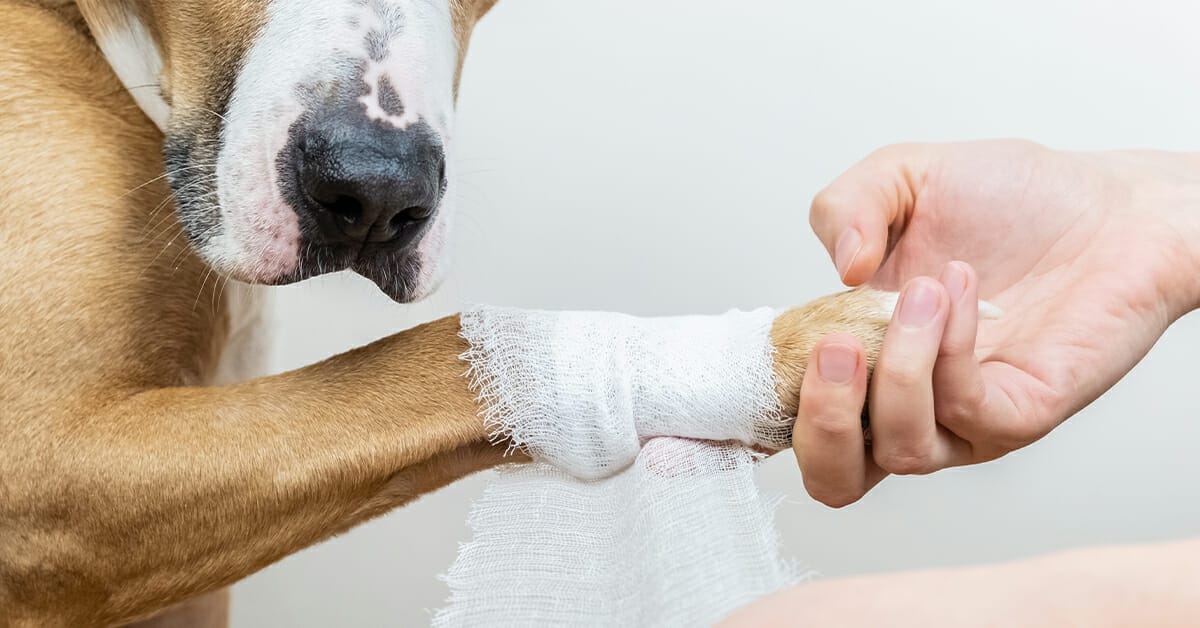
- Apply firm, direct pressure with a clean cloth or gauze
- Do not remove soaked material—layer more on top
- Seek veterinary care immediately
- Internal injuries and infection are common and may not be visible. Contact your family veterinarian right away or bring your pet to the nearest MedVet emergency location.
What to Expect at the Hospital
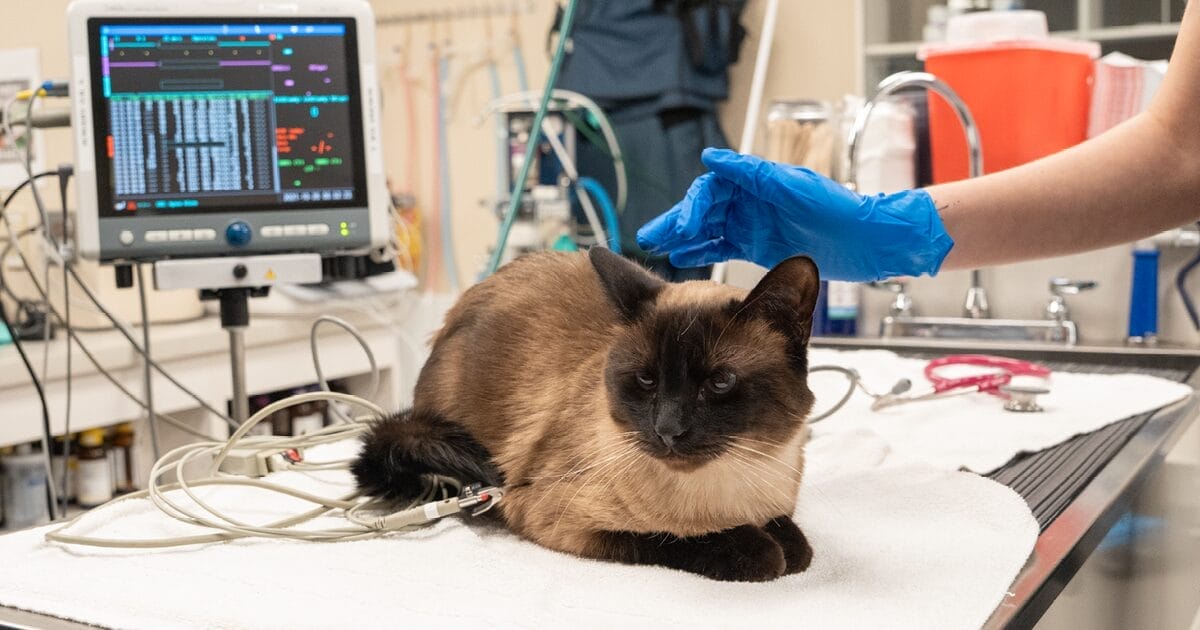
- Thorough physical exam
- Diagnostic imaging (such as X-rays or ultrasound) if needed
- Wound cleaning and possible surgery
- Antibiotics and pain management
- Rabies booster if indicated
Prompt treatment can be lifesaving.

Report Aggressive Coyote Behavior
Help protect other pets by reporting attacks or aggressive coyotes to local animal control. Provide the date, time, and location to support wildlife management efforts. Consider alerting neighbors through community groups.
MedVet Is Here When You Need Us
Despite your best precautions, attacks can happen. If your pet is injured by a coyote or other wildlife, every minute counts. Our emergency veterinarians are available 24/7 to provide immediate, lifesaving care.
Find your nearest MedVet location and learn more at www.medvet.com/locations.
FAQs
Are coyotes dangerous to large dogs?
Coyotes most commonly target small pets under 25 pounds, but larger dogs can be injured, especially if multiple coyotes are involved.
What time of day are coyote attacks most likely?
Dusk and dawn are peak activity times, though coyotes are increasingly seen during daylight in suburban areas.
Should I let my cat outside if coyotes are nearby?
Cats should be kept indoors at night or provided with a secure enclosed outdoor space such as a catio.
How quickly should I seek veterinary care after a coyote bite?
Immediately. Even small puncture wounds can hide internal injuries and bacteria that cause severe infection.
Learn More
For ways to ensure your pet lives a happier, healthier life, visit our Pet Care Resources library.
Pet Care ResourcesShare



Contents
Learn More
For ways to ensure your pet lives a happier, healthier life, visit our Pet Care Resources library.
Pet Care Resources