Gastrointestinal Endoscopy in Dogs and Cats: What Pet Owners Should Know
Learn how GI endoscopy safely diagnoses vomiting, diarrhea, and foreign bodies in dogs and cats with a minimally invasive approach.
Gastrointestinal (GI) issues are common in pets, and when your dog or cat is experiencing chronic vomiting, diarrhea, weight loss, or difficulty swallowing, your veterinarian may recommend an endoscopy. This minimally invasive procedure allows specialists to examine the esophagus, stomach, and intestines, often without the need for surgery. It can also be used to remove certain types of foreign objects, helping many pets avoid more invasive procedures.
What is a Gastrointestinal Endoscopy?
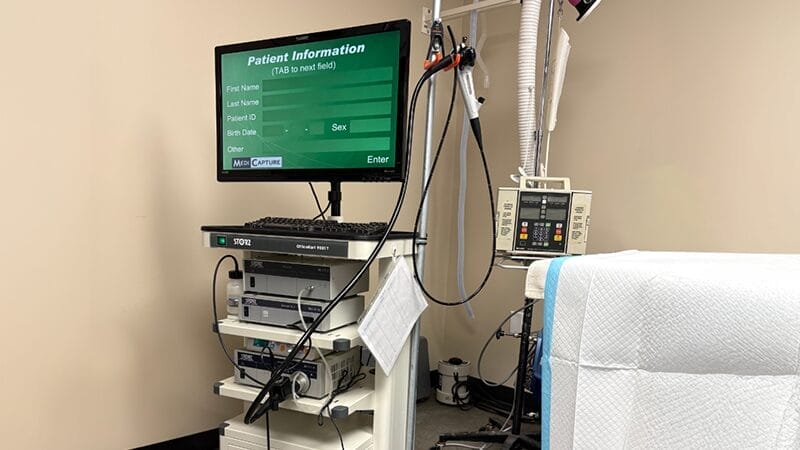
An endoscopy uses a thin, flexible tube with a camera and light at the tip to visualize the inside of the GI tract. Depending on your pet’s signs, your MedVet veterinarian may perform:
- Upper GI endoscopy: evaluates the stomach, esophagus, and the beginning of the small intestine
- Lower GI endoscopy (colonoscopy): evaluates the colon and rectum
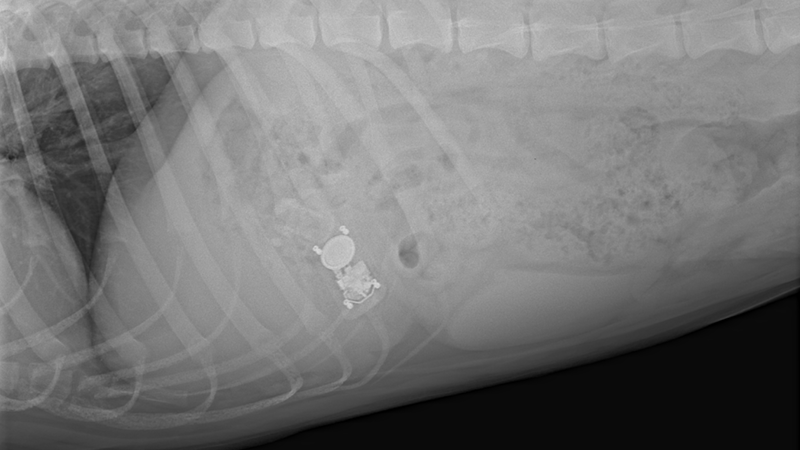
This procedure provides high-quality, real-time imaging that helps specialists identify inflammation, masses, ulcers, strictures, or foreign objects – which can be life-threatening. Learn more about gastrointestinal foreign bodies in our blog post. It also enables veterinarians to collect biopsy samples using minimally invasive instruments, which are essential for accurate diagnosis.
Endoscopy is frequently recommended for diagnosing gastrointestinal issues. Both the recommendation and the procedure itself typically come from a veterinary internal medicine specialist. These specialists receive specialized training in performing comprehensive endoscopic evaluations and interpreting what they observe during the examination.
Endoscopy is often recommended as part of a diagnostic evaluation for gastrointestinal issues and facilitates targeted treatment. Typically, a veterinary internal medicine specialist will both recommend and perform the procedure. These specialists receive specialized training in conducting thorough endoscopic evaluations and interpreting their findings.
Why Your Pet May Need an Endoscopy
Your veterinarian may recommend a GI endoscopy if your dog or cat experiences:
- Chronic vomiting or regurgitation
- Ongoing diarrhea
- Unexplained weight loss
- Difficulty swallowing
- Suspected foreign body ingestion
- Chronic or recurrent GI discomfort
- Blood in the stool or vomit
Endoscopy is especially helpful in diagnosing inflammatory bowel disease (IBD), certain types of cancer, gastric ulcers, esophageal disease, and polyps.
Preparing Your Pet for the Procedure
The first step is a thorough discussion with your veterinarian about your pet’s clinical signs, previous test results, and response to any prior treatments. This conversation helps determine the best diagnostic approach for your pet, which may or may not include endoscopy as the initial recommendation.
Your veterinary team will provide specific instructions, but preparation typically includes:
- Fasting for 8–12 hours
- Withholding water for a short period
- Controlled bowel preparation for colonoscopy using safe, pet-friendly solutions
Pre-anesthetic testing, such as bloodwork, helps ensure your pet is healthy and safe for anesthesia.
What Happens During a GI Endoscopy?
GI endoscopy is performed while your pet is under general anesthesia to keep them comfortable and still. Throughout the procedure, your pet is monitored closely by trained veterinary professionals using advanced equipment.
During the endoscopy:
- The endoscope is carefully inserted into the mouth (or anus) and carefully maneuvered to complete a full evaluation of the GI tract.
- The specialist examines the lining for abnormalities.
- Biopsy samples are collected using small, precise instruments.
- In some cases, polyps or small foreign bodies can be removed.
Advances in endoscopic tools allow veterinarians to perform more precise biopsies and remove a wider variety of objects, meaning fewer pets require surgery.
How Endoscopy Helps Diagnose GI Issues
Endoscopy allows your care team to:
- Identify inflammation or irritation
- Detect ulcers or erosions
- Evaluate strictures, polyps, or tumors
- Collect biopsies for laboratory analysis
Endoscopic biopsies are less invasive than surgical biopsies. They play an important role in differentiating between inflammatory conditions like IBD and cancerous GI conditions like lymphoma. These biopsies provide essential information for selecting the appropriate treatment path, whether your pet has IBD, an infectious disease, or GI cancer.
Some of the conditions frequently diagnosed or confirmed using GI endoscopy include:
- Inflammatory Bowel Disease (IBD)
- Gastric or intestinal lymphoma
- Foreign body ingestion
- Gastritis, enteritis, and colitis
- Esophageal strictures
- Polyps, ulcers, and masses
- Chronic protein-losing enteropathies (PLE)
Is Endoscopy Safe for Pets?
Endoscopy is considered very safe, with minimal risks. Potential complications may include:
- Mild bleeding at biopsy sites
- Temporary nausea or GI upset
- Rare reactions to anesthesia
- Extremely rare, but perforation can occur when severely diseased tissue causes the biopsy instrument to penetrate the stomach or intestinal wall, requiring emergency surgery
Advances in anesthesia monitoring and scope technology have improved safety, making it a viable option even for senior pets or those with underlying health conditions. Our blog post on anesthesia in older pets offers more detailed information. Your MedVet veterinarian will discuss any risks and tailor the procedure to your pet’s needs.
Most pets go home the same day. After the procedure, your pet may:
- Be slightly sleepy
- Experience mild throat irritation
- Have softer stools or temporary diarrhea
Your care team will provide feeding instructions and review when to resume medications. Biopsy results usually return within several days, allowing your veterinarian to develop a targeted treatment plan.
Benefits of Endoscopy Compared to Surgery
GI endoscopy offers several advantages, including:
- Minimally invasive approach
- Faster recovery
- Less discomfort
- No external incisions
- Ability to diagnose and treat during the same procedure
- Reduced need for abdominal surgery in many cases
When Surgery May Still Be Necessary
In some situations, surgery may still be the better option, such as:
- Large or sharp foreign bodies that cannot be safely removed via endoscopy
- Lesions beyond the reach of the scope
- Conditions that require biopsy deeper into the wall of the intestines
- Identification of changes in organs beyond or outside the GI tract (e.g. spleen or lymph nodes)
If surgery is recommended, your MedVet team will explain why and review the safest next steps. Ultimately, your MedVet team is dedicated to guiding you through every decision, ensuring the most appropriate and effective care for your beloved companion.
Locate your nearest MedVet.
FAQs
Do pets need to stay in the hospital for GI endoscopy?
Most pets go home the same day. However, for procedures like colonoscopy or if additional monitoring is needed, your veterinarian may recommend an overnight stay. Your MedVet team will provide clear guidance based on your pet’s individual needs.
How long does a GI endoscopy take?
The duration varies depending on the area being examined, whether biopsies are taken, or if a foreign object is removed. Typically, the procedure takes 30–90 minutes, not including preparation and recovery time.
Will my pet need surgery after endoscopy?
In many cases, endoscopy allows diagnosis and treatment without surgery. However, surgery may be necessary if the foreign object is too large, a mass is out of reach, or full-thickness biopsies are required. Your veterinarian will discuss the safest options.
How soon will I get biopsy results?
Biopsy samples are sent to a pathology lab, with results usually returned in 3–7 days. Once available, your internal medicine specialist will review the findings and recommend a treatment plan tailored to your pet.
Learn More
Veterinary internal medicine specialists treat complex internal systems: the gastrointestinal tract, kidneys, central nervous system, and endocrine system.
Veterinary Internal MedicineShare




Contents
Learn More
Veterinary internal medicine specialists treat complex internal systems: the gastrointestinal tract, kidneys, central nervous system, and endocrine system.
Veterinary Internal Medicine