Kidney Stones in Dogs and Cats: Signs, Treatment, and Care
Kidney stones in pets can cause pain or urinary blockage. Learn the signs, treatment options, and how to protect your dog or cat’s kidney health.
Both dogs and cats can develop kidney stones, and the health impacts range from minimal to the development of kidney failure or urinary tract obstruction. Every patient’s situation is unique, and the medical recommendations will vary based on the whole picture of your pet’s health.
Understanding Your Pet’s Urinary System
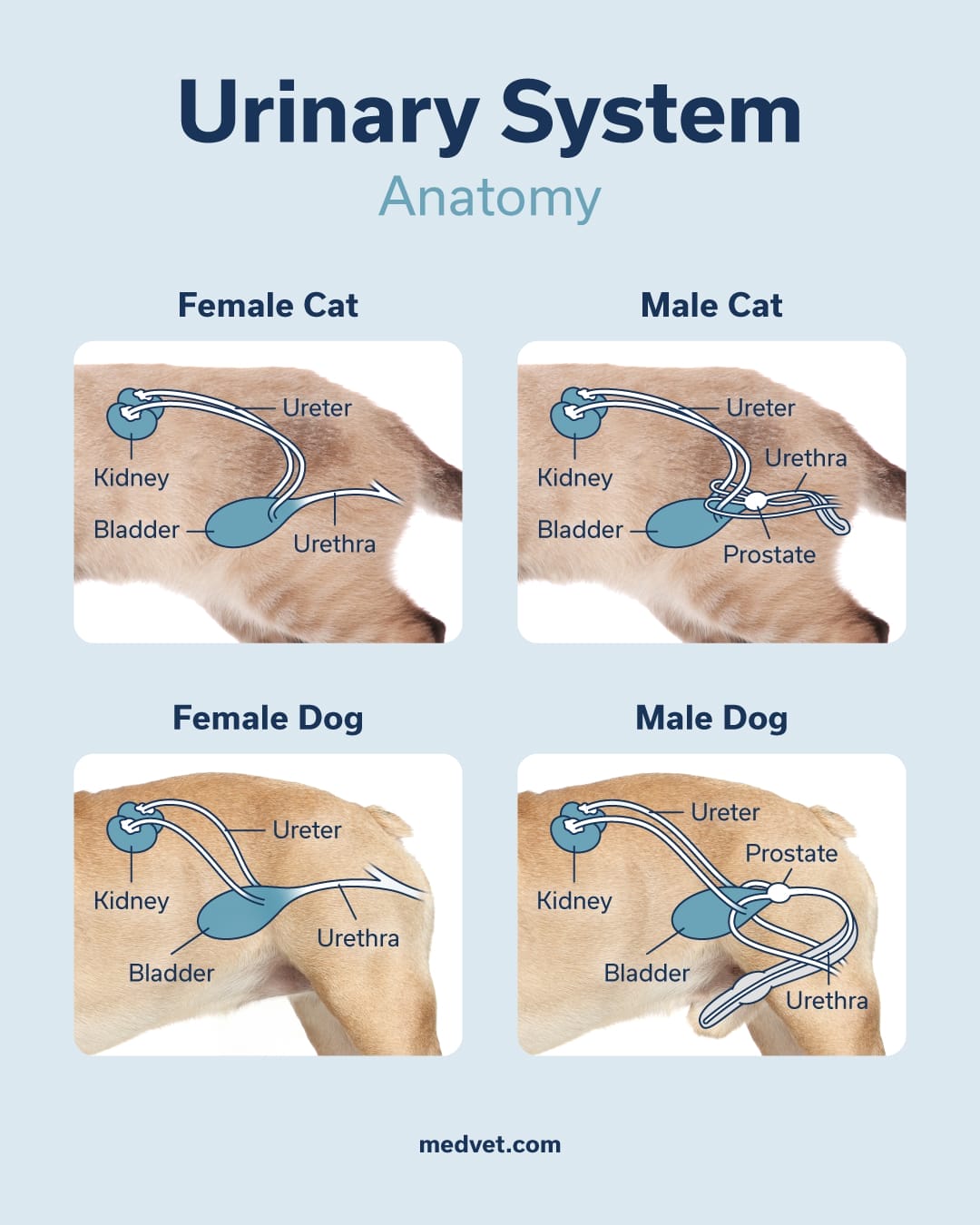
Dogs and cats have similar anatomy to humans. Their urinary tract is divided into four parts:
- Kidneys – the main organ of the urinary tract. The kidney filters toxins, makes urine, and helps our bodies conserve water.
- Ureters – the tube that takes urine to the bladder
- Bladder – reservoir for urine
- Urethra – the tube that voids urine outside of the body
What Are Kidney Stones and Ureteral Stones in Pets?
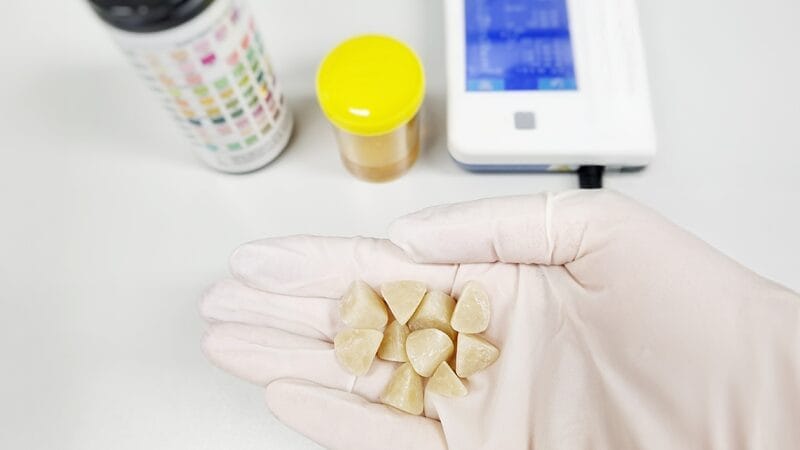
Pets can have stones in their kidneys that are not causing any signs; the stones are only diagnosed when taking an X-ray or performing an ultrasound for an unrelated problem.
However, there are times when kidney stones can become a problem and can be the cause of a patient’s signs. These include stones obstructing urine flow, a bacterial infection within the stone that isn’t resolving, chronic exposure to stones that leads to kidney damage, and finally, stones that get excessively large and compress the kidney.
Pets can ‘pass a kidney stone’ just like a person might. This is when a smaller-sized kidney stone enters a ureter and starts to move towards the bladder. This is known to be very painful in people, but our pets are often very stoic, and identifying a dog or cat in pain can be difficult.
Unfortunately, these stones don’t always make it to the bladder, and sometimes they get stuck in the ureter (thus becoming a ureteral stone). Animals have two kidneys and two ureters, so this can happen on just one side of their body, but they can also have issues with kidney or ureteral stones on the right and left at the same time. Ureteral stones are high-risk to cause a urinary tract obstruction – this is both painful and can cause pressure damage to the kidney.
Signs of Kidney Stones in Dogs and Cats
Signs indicating possible kidney or ureter stones could include:
- Abdominal pain (tensing the belly, holding an abnormal posture, moving less at home)
- Blood in the urine
- Recurrent UTIs
- Lethargy
- Vomiting
- Poor appetite
Types of Kidney Stones in Dogs and Cats
The three most common types of stones are calcium oxalate stones, struvite stones, or urate stones. The best way to determine which type of stone a pet has is to submit the stone for laboratory analysis. However, this isn’t always possible or practical—sometimes stones pass before they can be collected, or they may be too small to retrieve. When stone analysis isn’t available, we can use hints about the patient’s age, breed, diet, or the features visible on imaging to make an educated assessment and implement more comprehensive plans for long-term care.
Calcium Oxalate Stones in Pets
These stones are mostly related to genetic factors and are seen in cats and certain dog breeds. Once a pet has started to get calcium oxalate stones, they are likely to keep getting them for the rest of their life. Diets and medications can sometimes prevent enlargement of current calcium oxalate stones or prevent new stones from forming, but this type of stone cannot be dissolved. Unfortunately, even with diet and medication, recurrence risk can be reduced but not eliminated, given the genetic basis for this stone-type.
Struvite Stones: Dissolving Kidney Stones Without Surgery
Struvite stones are unique in that this type of stone can be dissolved. In dogs, these stones are linked with UTIs. If treatment clears the infection and it doesn’t return, then these stones can dissolve (typically also with diet change and medications). Cats are less likely to have UTIs associated with struvite stones, but dissolution of these stones can still be achieved with diet and medications.
Urate Stones and Liver Disease in Dogs and Cats
Urate stones are most associated with liver disease and are best managed by identifying and reversing the underlying liver disease. Certain imaging changes, bloodwork changes, or breeds may signal your veterinarian to consider urate stones.
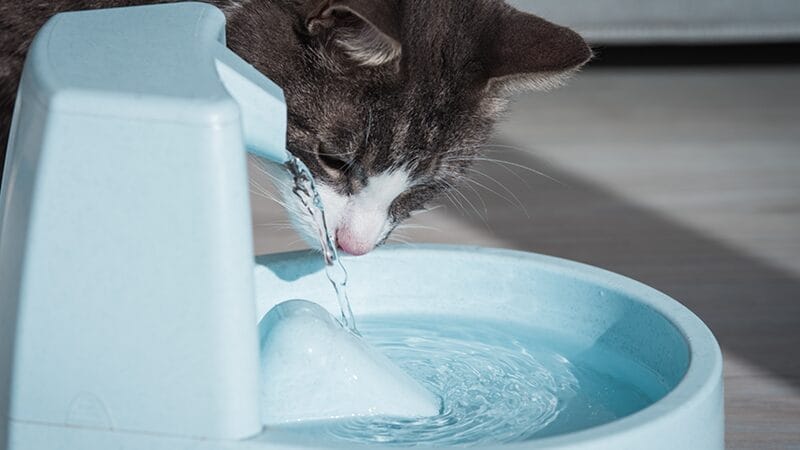
All patients with urinary stones benefit from increased water intake, and using strategies like adding water to food, switching to canned food, or using a pet water fountain may help.
Treatment Options for Kidney and Ureteral Stones in Pets
There are several scenarios where removing a kidney stone might be necessary. If a patient has no signs and acceptable kidney parameters on bloodwork, then it is possible stone removal will not be recommended. However, when ureteral stones are discovered, they are more likely to be causing the pet problems, and intervention may be needed.
Unfortunately, the best approach isn’t straightforward. The main issues with ureteral stones are 1) the ureters are very small which makes the removal surgery technically difficult, 2) ureters can scar after surgery, causing post-surgical complications, and 3) a pet that has passed one stone is likely prone to produce more stones in the future, so it can be harder to justify the invasiveness and cost of a major surgery.
"Every pet’s situation is unique, and treatment recommendations depend on the full picture of their health. With today’s advanced medical options, many pets with urinary stones can continue to live comfortable, active lives."
Luckily, medical advancements have led to new options for patients with ureteral stones and obstructions. The biggest problem for patients with obstruction is that their urine has no way to pass to the bladder. Medical devices have been developed to provide a route for urine to pass. A stent (medical tubing) placed through the ureter can be inserted, or a subcutaneous ureteral bypass (SUB) can be placed, providing an alternate route for urine to flow from the kidney to the bladder through tubing placed under the skin. These are difficult surgeries only performed by experts in veterinary surgery or internal medicine. We are glad there are a wider array of options to help these patients, though, unfortunately, not all patients are candidates for these surgeries.
There is one type of stone (struvite) that can be dissolved with medical treatments, typically over weeks or months. These stones can disappear entirely, without surgery. So, in cases where this type of stone is suspected and the need for stone removal isn’t urgent, your veterinarian may recommend treatments that could lead to stone dissolution without an invasive procedure.
Managing Your Pet’s Kidney Stones: Long-Term Care and Prevention
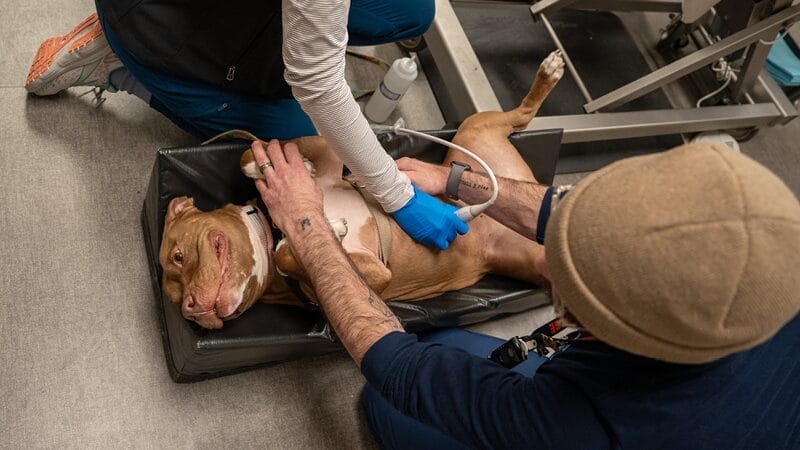
Patients with known urinary stones are recommended to have their kidney values and urine samples regularly checked. Regular imaging with X-rays or ultrasound can also help monitor the number or size of stones. When we know what type of stone the patient produces, a veterinarian can make even further recommendations to prevent stone growth or recurrence.
When to Contact Your Veterinarian About Kidney Stones
Kidney stones and ureteral obstructions can be concerning diagnoses for pet owners, but with proper monitoring, treatment, and preventive care, many pets with urinary stones go on to live healthy, comfortable lives.
The key is rapid detection and working closely with your veterinarian to develop an individualized care plan for your pet. If you notice any of the signs mentioned in this article—such as abdominal pain, blood in the urine, vomiting, or changes in appetite—don’t hesitate to contact your veterinarian. When discovered early, simple interventions and monitoring can make a significant difference in your pet’s outcome and quality of life.
Locate your nearest MedVet.
FAQs
What are the signs of kidney or ureteral stones in dogs and cats?
Common signs include abdominal pain, blood in the urine, recurrent urinary tract infections, lethargy, vomiting, and decreased appetite. Some pets may show subtle signs or none at all, which is why routine veterinary exams and imaging are important.
Can kidney stones in pets be treated without surgery?
In some cases, yes. Certain stones—such as struvite stones—can be dissolved over time with diet changes and medications. Other stone types cannot be dissolved and may require monitoring or advanced interventions, depending on symptoms and risk.
How are ureteral stones treated in dogs and cats?
Ureteral stones may cause urinary obstruction and often require intervention. Treatment options can include medical management, ureteral stents, or a subcutaneous ureteral bypass (SUB), which helps urine flow from the kidney to the bladder when normal pathways are blocked.
Learn More
Veterinary internal medicine specialists treat complex internal systems: the gastrointestinal tract, kidneys, central nervous system, and endocrine system.
Veterinary Internal MedicineShare




Contents
Learn More
Veterinary internal medicine specialists treat complex internal systems: the gastrointestinal tract, kidneys, central nervous system, and endocrine system.
Veterinary Internal Medicine