Understanding and Managing Keratoconjunctivitis Sicca (Dry Eye) in Dogs and Cats
Learn about dry eye in pets: causes, signs, diagnosis, and treatment options to help manage your pet's eye health and comfort.
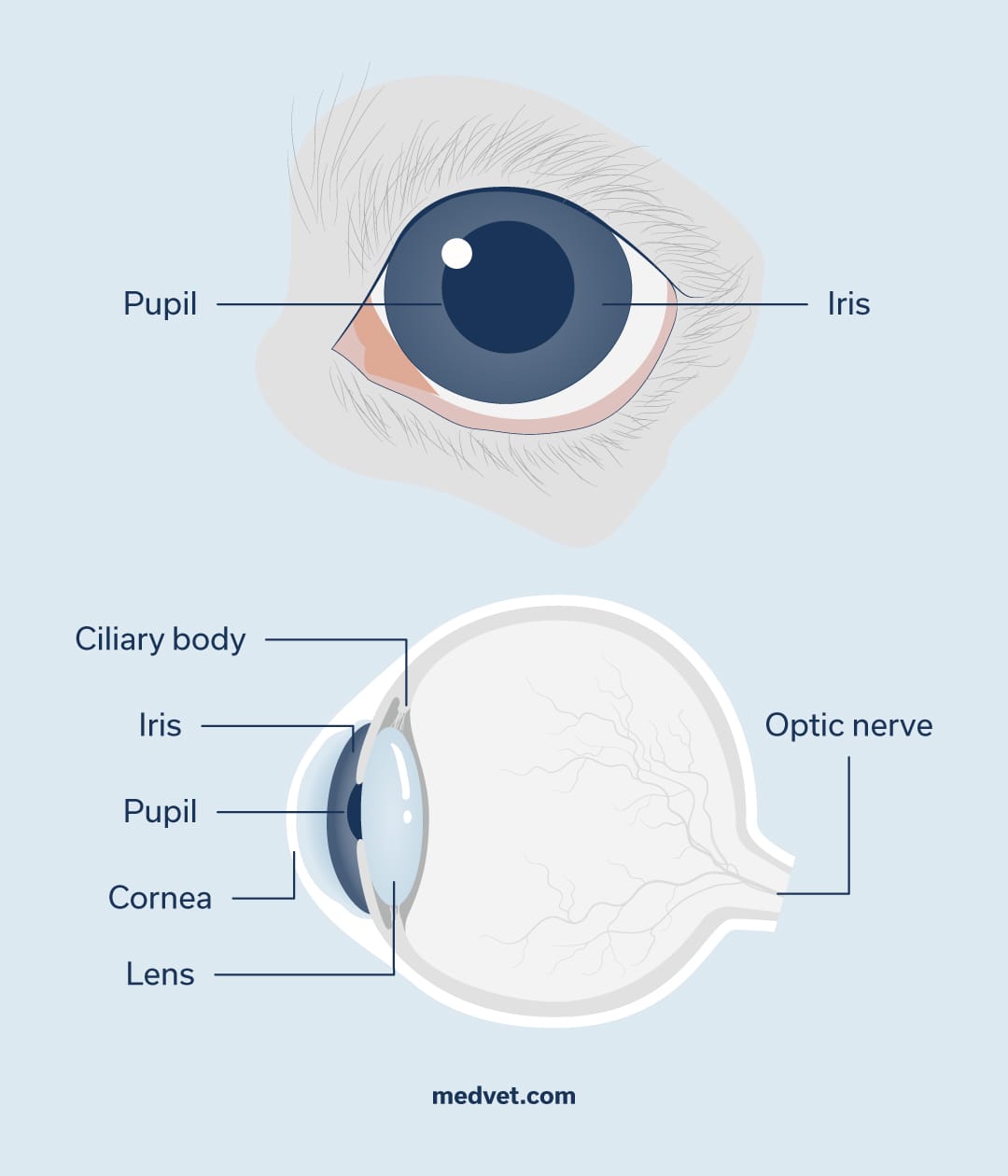
Keratoconjunctivitis sicca (KCS), commonly known as dry eye, is a condition that affects the health and comfort of your pet’s eyes. It occurs when there’s a lack of tear production, leading to changes in the cornea—the clear front portion of the eye. This condition can cause discomfort, vision problems, and if left untreated, potentially lead to serious complications such as corneal ulcers, scarring, or even blindness.
The Importance of Tears for Eye Health
Tears are crucial for maintaining the health of the cornea. They supply oxygen and nutrients since the cornea lacks blood vessels. The tear film is composed of three layers:
- Oily Layer: Produced by glands in the eyelids, this outermost layer helps prevent tear evaporation.
- Watery Layer: The middle layer, produced by the lacrimal gland, is primarily affected in KCS. It provides moisture and helps maintain the eye’s health.
- Mucous Layer: The innermost layer, produced by glands in the conjunctiva, helps the watery layer adhere to the cornea.
KCS is characterized by a deficiency in the watery layer, leading to dryness, discomfort, and potential scarring of the cornea, which can impair vision.
Causes of Dry Eye in Pets
Several factors can contribute to the development of dry eyes in dogs and cats, including:
- Immune-Mediated Inflammation: The body’s immune system is attacking the lacrimal gland.
- Hypothyroidism: A condition where the thyroid gland doesn’t produce enough thyroid hormones, which can be associated with KCS.
- Infections: Certain infections can damage the lacrimal gland. In cats, chronic feline herpesvirus (FHV-1) infection is a common cause.
- Nerve Damage: Loss of nerve impulses to the lacrimal gland can reduce tear production.
- Toxic Effects: Some medications, especially antibiotics and anti-inflammatory drugs that contain sulfa, can cause dry eye in pets as an unintended side effect.
Dry eyes are more common in dogs than cats. In dogs, some breeds are more predisposed, including Bulldogs, Cocker Spaniels, Lhasa Apsos, Pugs, Shih Tzus, and West Highland White Terriers.
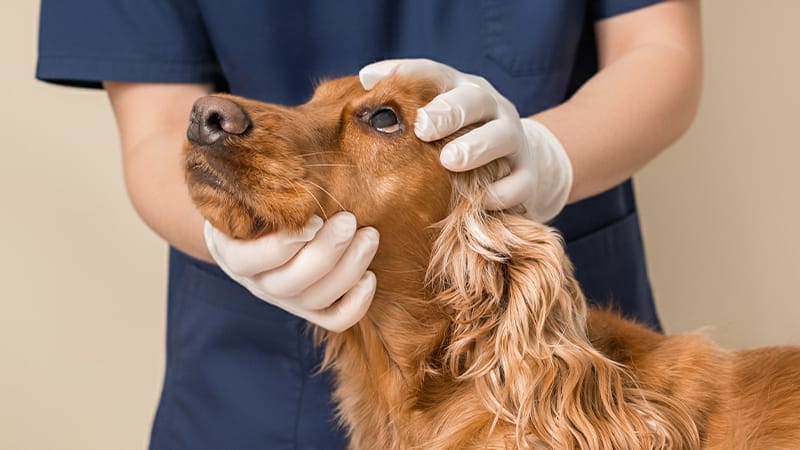
Signs of Dry Eye You May Notice in Your Pet
As a pet owner, the first signs of dry eye are often subtle. Common things to look out for include:
- Thick, sticky, or mucous-like discharge
- Red or irritated-looking eyes
- Frequent squinting or blinking
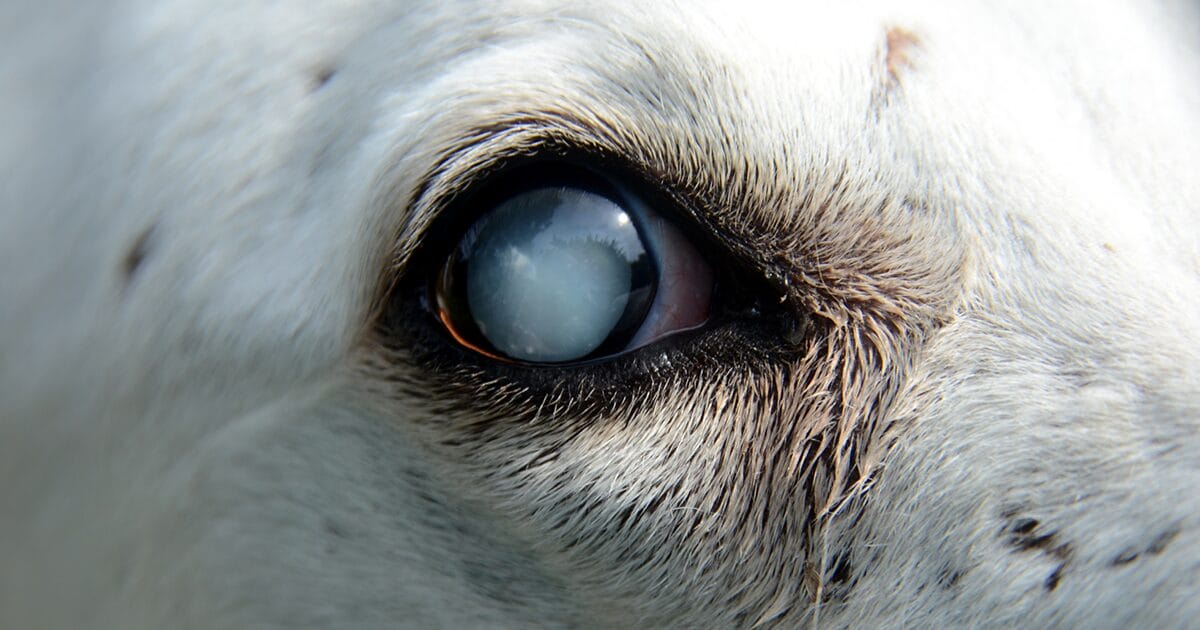
- Dull, dry, or cloudy-looking eyes
- Dark pigment or visible blood vessels on the cornea (from chronic irritation)
For more information on what’s normal and what’s not in your pet’s eyes, read our blog post.
Diagnosing Dry Eye in Pets
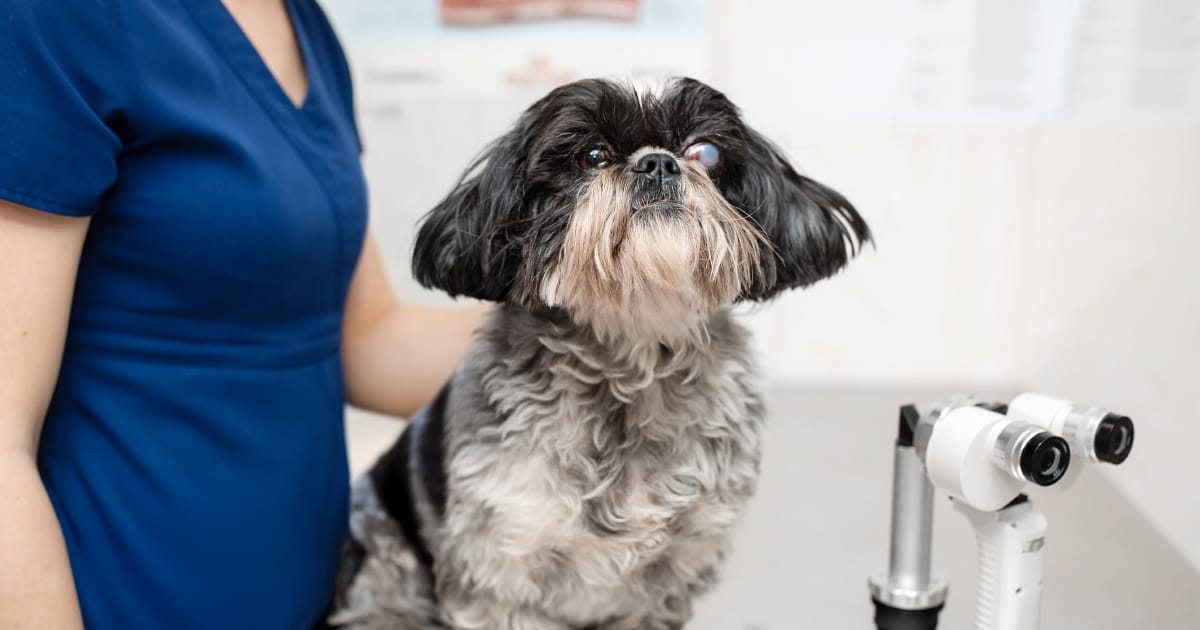
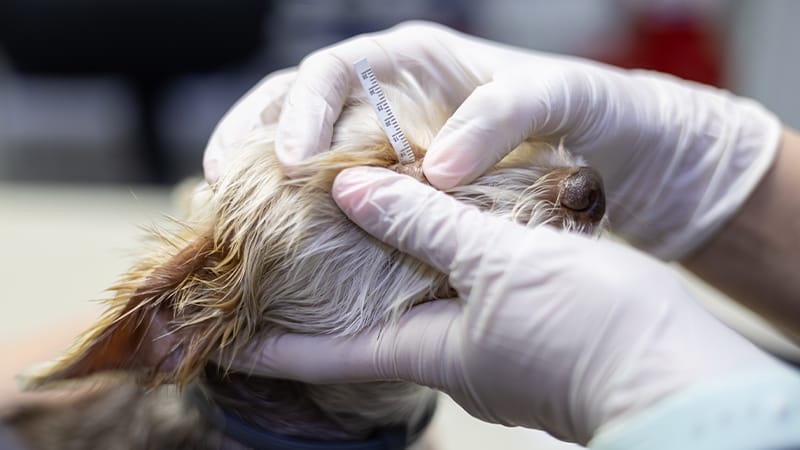
Diagnosing KCS involves a simple yet effective test called the Schirmer tear test, which measures tear production over one minute. Additionally, a fluorescein stain may be used to check for corneal ulcers and assess the tear film’s stability.
Treatment Options for Dry Eye in Pets
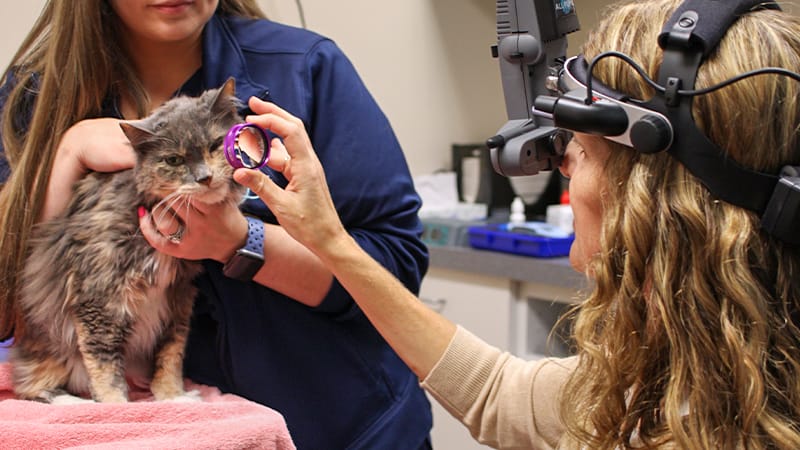
In some cases, your family veterinarian may determine that your pet requires specialized care for dry eye. If this is the case, they may refer you to a veterinary ophthalmologist—a specialist who has received advanced training in the diagnosis and treatment of eye conditions in animals. Veterinary ophthalmologists are equipped to handle complex cases and can provide a more detailed assessment and treatment plan tailored to your pet’s specific needs.
The primary approach to managing KCS involves medications that aim to stimulate tear production and reduce inflammation.
- Tacrolimus and Cyclosporine: These local immunomodulators are commonly prescribed to reduce inflammation in the lacrimal glands, thereby increasing tear production.
- Pilocarpine: In cases where nerve damage is a factor, pilocarpine may be used to stimulate the lacrimal gland. However, this medication can cause side effects such as:
- Vomiting
- Diarrhea
- Decreased appetite
For pets that don’t respond to these treatments, other options may be considered, such as:
- Antibiotics: To control bacterial overgrowth, which is common in dry eye patients due to the accumulation of mucus.
- Anti-Inflammatory Drugs: To reduce inflammation and prevent scarring.
- Artificial Tears: Ointments or solutions that provide additional lubrication. For guidance on administering these effectively, you may find our videos on how to give your pet eye drops and how to apply eye ointment to your pet helpful.
For pets that don’t respond to medical therapy, a surgical procedure known as parotid duct transposition (PDT) may be considered. This involves redirecting a salivary duct to the eye to substitute saliva for tears. While this can be an effective solution, it’s typically reserved for cases where medical management has failed due to potential complications.
Managing Your Pet’s Dry Eye
Effectively managing your pet’s dry eye requires a multi-faceted approach that involves consistent treatment, patience, and proper eye care. By understanding the importance of each aspect of care, you can work closely with your veterinarian to develop a comprehensive plan that addresses your pet’s specific needs. Here are some key considerations and tips to help you manage your pet’s dry eye:
- To manage dry eye effectively, it’s essential to administer prescribed medications regularly. This consistency is key to controlling the condition and preventing complications.
- Managing dry eyes requires patience and persistence. It may take several weeks or months to see improvement, and in some cases, normal tear production may never be fully restored. However, with proper care, pets can stay comfortable and keep their vision.
- Keeping the eyes moist with artificial tears is necessary. This helps reduce the risk of corneal scarring during the treatment period and provides your pet with much-needed comfort.
- Monitoring your pet’s condition is vital. Keep an eye out for signs of dry eye, such as redness, discharge, or squinting, and report any changes to your veterinarian.
- Following the treatment plan recommended by your veterinarian. Adhering to their advice will help ensure the best possible outcome for your pet.
- Regular veterinary visits are necessary for managing the condition and adjusting the treatment as necessary. These check-ups will help your veterinarian assess your pet’s response to treatment and make any needed adjustments.
Dry eyes are a manageable but chronic condition. With commitment, patience, and the right treatment plan, most pets can live comfortably and enjoy a good quality of life. Always consult with a veterinarian for personalized advice and care tailored to your pet’s specific needs.
Learn more about veterinary ophthalmology.
FAQs
What is keratoconjunctivitis sicca, commonly known as dry eye, in cats and dogs?
It occurs when there's a lack of tear production, leading to changes in the cornea—the clear front portion of the eye. This condition can cause discomfort, vision problems, and if left untreated, potentially lead to serious complications such as corneal ulcers, scarring, or even blindness.
What causes dry eye in cats and dogs?
Several factors can contribute to the development of dry eye in dogs and cats, including immune-mediated inflammation, hypothyroidism, infections, nerve damage, and toxic effects such as medications.
What are the signs that my dog or cat has dry eye?
The first signs of dry eye are often subtle and can include thick mucus-like discharge, red or irritated-looking eyes, frequent squinting or blinking, dull or cloudy-looking eyes, and visible blood vessels on the cornea.
How is dry eye in cats and dogs treated?
The primary treatment for dry eye involves medications that stimulate tear production and reduce inflammation. For pets that don’t respond to these treatments, other options may include antibiotics, anti-inflammatory drugs, artificial tears, or serum eye drops.
Learn More
Regular eye check-ups for your pet help maintain their eye health and detect any potential health issues.
Veterinary OphthalmologyShare




Contents
Learn More
Regular eye check-ups for your pet help maintain their eye health and detect any potential health issues.
Veterinary Ophthalmology